In recent years, Spain’s water sector has faced growing structural challenges, most notably a chronic underinvestment in infrastructure. According to the 18th National Study on Drinking Water Supply and Sanitation (DAQUAS), the gap between actual needs and effective investment exceeds €4.4 billion annually. This shortfall not only limits the ability to renew aging networks but also jeopardizes the long-term sustainability of the system, particularly in the face of extreme climate events and increasing demographic pressure in urban areas.
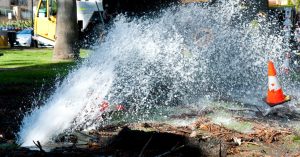
Water supply and sewer networks are showing clear signs of aging. More than 50% of the sewer network is over 40 years old, while one third of drinking water infrastructure has already surpassed that threshold. However, current renewal rates remain extremely low: barely 0.54% per year for water supply and an alarming 0.12% for sewer networks. At this pace, it would take centuries to fully replace existing infrastructure.
This situation creates a paradox: the urgency to act coexists with limited financial resources. The question is no longer whether investment is necessary, but how to prioritize it in a rational, technical, and efficient way. This is where a key concept for the future of water management emerges: knowing in order to decide.
From reactive maintenance to preventive management
The transition from reactive models, focused on responding to failures and breaks, toward preventive strategies based on a clear understanding of infrastructure conditions has become unavoidable. This transformation relies on technological tools capable of delivering reliable, fast, and non-invasive diagnostics. In this context, condition assessment stands out as one of the most innovative solutions available.
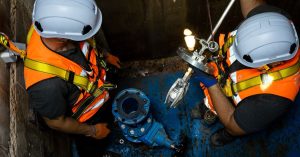
Thanks to technologies such as those developed by Aganova, utilities can now evaluate the internal condition of pipelines without excavation or service interruption. Devices traveling through the pipes, propelled by the water flow itself, are able to detect cracks, corrosion, air pockets, or sections with a high risk of failure. The information obtained not only identifies critical points but also enables projections of how the network will behave over time based on its actual condition.
These diagnostics represent a turning point in decision-making. Traditional methodologies often prioritized network renewal based on pipe age or operational intuition. By contrast, condition assessment provides objective data that allows investments to be directed precisely where they are most needed. Not all old pipes are in poor condition, and not all new ones are risk-free. Accurate and timely knowledge is the foundation for sound decision-making.
Efficiency, sustainability and resilience in water management
Beyond operational efficiency, these technologies deliver significant value in terms of sustainability and resilience. In a context defined by climate change—with prolonged droughts and increasingly frequent flooding, maintaining robust and well-managed networks has become imperative.
Leak prevention not only avoids water losses, an increasingly scarce resource, but also reduces emissions associated with pumping and treatment, helping to lower the carbon footprint of the urban water cycle.
The DAQUAS report also highlights the need to accelerate the digitalization of the water cycle. In this regard, condition assessment plays a key role within digital transformation processes. Data collected during inspections can be integrated into advanced management platforms, feed predictive models, and support dynamic, evidence-based planning. In this way, knowledge is no longer limited to a single inspection but becomes a strategic resource for the entire organization.
A cultural shift in infrastructure management
Adopting a preventive vision based on anticipation also requires a cultural shift. It means moving away from a reactive “patch-and-repair” mindset toward proactive, systematic, and long-term planning. It also involves investing in workforce training, strengthening public-private collaboration, and incorporating new technical profiles into the sector.
Above all, it requires institutional leadership and a strong commitment to innovation as a driver of change.
Encouragingly, positive signals are already emerging. Public administration initiatives such as Spain’s PERTE program for water digitalization have mobilized significant investment, although still insufficient to fully address existing needs. Collaboration between utilities, research centers, and technology companies such as Aganova demonstrates that progress toward smarter water management is possible—management that does not wait for infrastructure to fail before taking action, but anticipates, prepares, and adapts.
International perspective: Learning from preventive models
The need to move toward preventive management models is not unique to Spain. Around the world, many countries have recognized that efficient water management requires a clear understanding of the actual condition of their networks. The United States offers a particularly illustrative example.
With much of its water infrastructure built in the mid-20th century, many American cities now face networks that are more than 50 years old. This aging infrastructure has fostered a culture of systematic inspection and strategic planning, with condition assessment playing a central role in determining where and when to intervene.
Federal programs such as the Drinking Water State Revolving Fund channel billions of dollars annually into infrastructure improvement projects, many of which rely on detailed technical evaluations to optimize investment decisions.
Cities such as Chicago, Boston, and Los Angeles already use advanced in-line inspection systems, remote sensors, and digital platforms that integrate condition assessment data to prioritize investments and prevent catastrophic failures.
Similarly, countries such as Australia, Canada, Germany, and the Netherlands have adopted proactive approaches based on continuous network condition monitoring. Across all these cases, the trend is clear: better decisions start with better knowledge.
Spain, with an equally extensive and diverse network, cannot afford to fall behind in this paradigm shift. International experience consistently shows that prevention is more effective, more economical, and more sustainable than repair.
Aganova: Technology serving preventive management
In this new landscape, companies such as Aganova are delivering distinctive solutions. Their technology is based on non-intrusive devices such as the Nautilus sphere, which travel through pipelines propelled by the natural flow of water.
During their journey, these devices collect data on the structural integrity of the pipeline, identifying cracks, deformations, corrosion, air pockets, and other critical issues that would otherwise remain invisible from the outside. This technology requires neither service interruption nor civil works, making it highly efficient and operationally compatible with networks in service.
In addition, Aganova has developed a complete ecosystem of complementary solutions. These include Jabega, which combines visual, ultrasonic, and acoustic inspection technologies, and Nemo, a digital platform that centralizes collected data and enables visual, integrated, and decision-oriented analysis.
Through this approach, condition assessment results are transformed into operational intelligence, supporting intervention planning, asset management, and the technical justification of infrastructure investments.
Aganova’s solutions address one of the sector’s most pressing needs: acting with knowledge, minimizing risk, optimizing costs, and advancing toward more resilient water networks. With operations in more than 60 countries and a collaborative approach with both public and private utilities, the company positions itself as a strategic partner in shifting water infrastructure management from urgency to prevention.
Ultimately, the future of water infrastructure depends on transforming the way networks are understood, diagnosed, and prioritized. Knowing the real condition of infrastructure is not a luxury, it is a necessity. Technologies such as condition assessment are not merely technical tools but essential strategies to ensure that water, a fundamental resource and human right, continues to flow safely, efficiently, and sustainably for generations to come.