Leak Detection and Condition Assessment of a Transmission Main in Wilmette, USA
Executive Summary
In March 2026, Aganova, in collaboration with M.E. Simpson, carried out an inline inspection using Nautilus technology on a 24-inch transmission main located in the center of Wilmette (USA).
The objective of the project was to assess the pipeline’s condition under normal operating conditions, enabling the detection, classification, and localization of potential leaks, air pockets, and anomalies without interrupting service.
The inspection covered a total length of 5,765 ft and was conducted under stable hydraulic conditions, with relatively constant flow rate and velocity throughout the inspection.
The analysis of the collected data did not identify any incidents along the inspected section, and the acoustic signals recorded were consistent with normal inspection activities. These results confirm the integrity of the pipeline and indicate no evidence of hydraulic or structural issues affecting the inspected section.
Client
Partner
Section
Transmission main with a lenght of 5.765 ft
Location
Wilmette, Illinois, USA
Date
March 8, 2026
Diameter
24 inches
Speed (ft/s)
Min
Max
0.52
0.66
Pressure (psi)
Min
Max
31.04
32.78
Distance (ft)
5.765
Introduction
The Village of Wilmette operates a transmission network that plays a critical role in the water supply.
In this context, the efficient management of large-diameter pipelines requires accurate information regarding their actual condition, particularly in sections where the detection of non-visible incidents represents a technical challenge.
To address this need, an inline inspection was carried out using Nautilus technology on a 24-inch transmission main located in the center of Wilmette, with the collaboration of M.E. Simpson on 8 March, 2026.
Challenge
The main challenge of this inspection was to assess the condition of the pipeline while maintaining normal operating conditions, without interrupting service.
Additionally, the detection of non-visible incidents required a high-precision solution capable of operating under real hydraulic conditions and providing reliable results even in the absence of surface indications.
Solution and Implementation
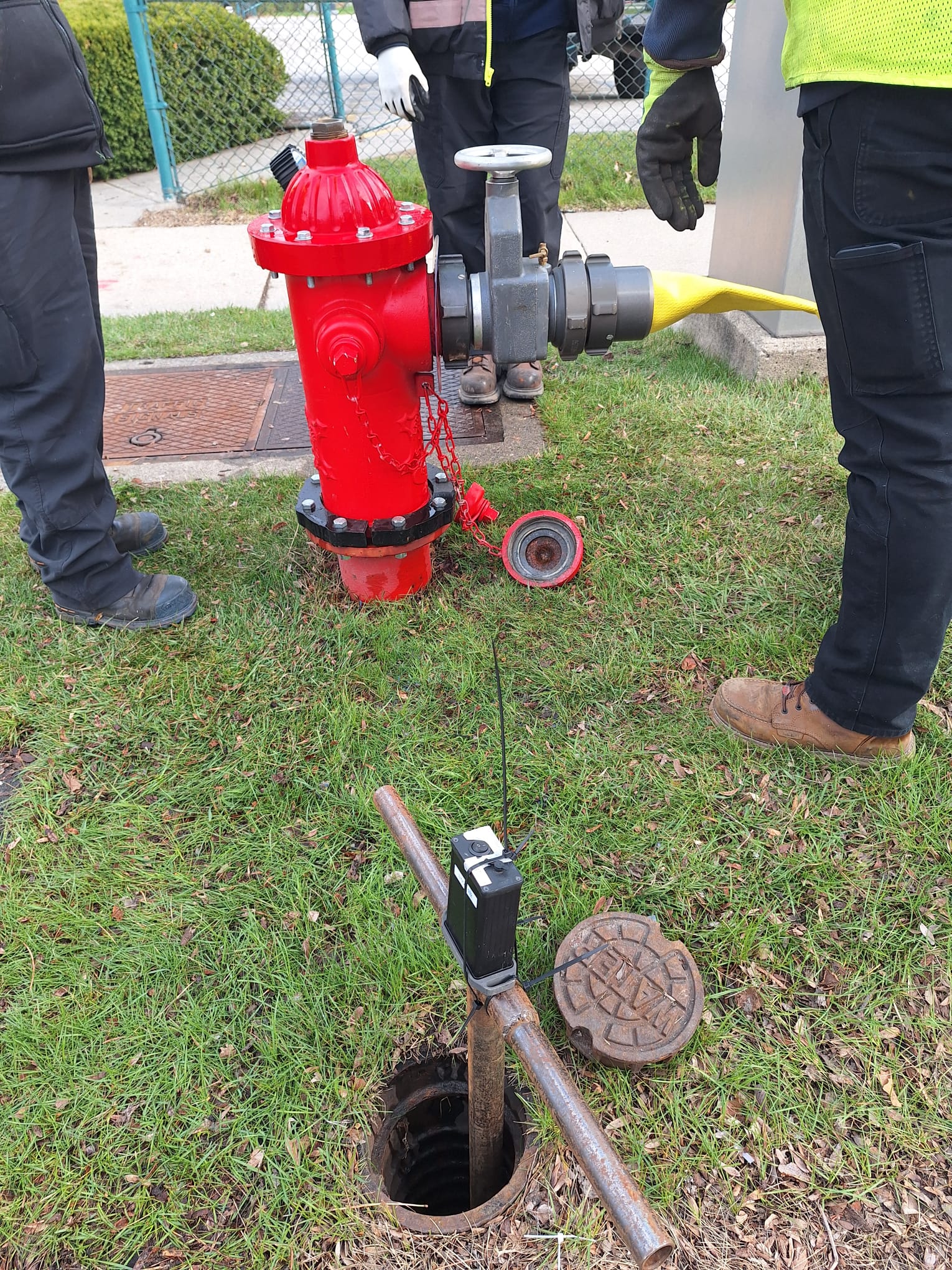
- Pre-inspection: In a preliminary phase, Aganova received the GIS, pipeline maps, and general pipeline data from M.E. Simpson/The Village of Wilmette in November 2025. Subsequently, M.E. Simpson conducted an initial pre-inspection in March 2026 to define the insertion, extraction, and synchronizer locations and carried out the necessary preparatory works for the deployment of Nautilus technology.
- Installation of Synchronizers: Were installed at a maximum distance of 750 meters, with a total installation time of approximately 30 minutes.
- Navigation: The Nautilus sphere navigated through the pipeline under a working flow rate of approximately 717 gal/min, covering a total distance of 5,765 ft. in approximately 3 hours.
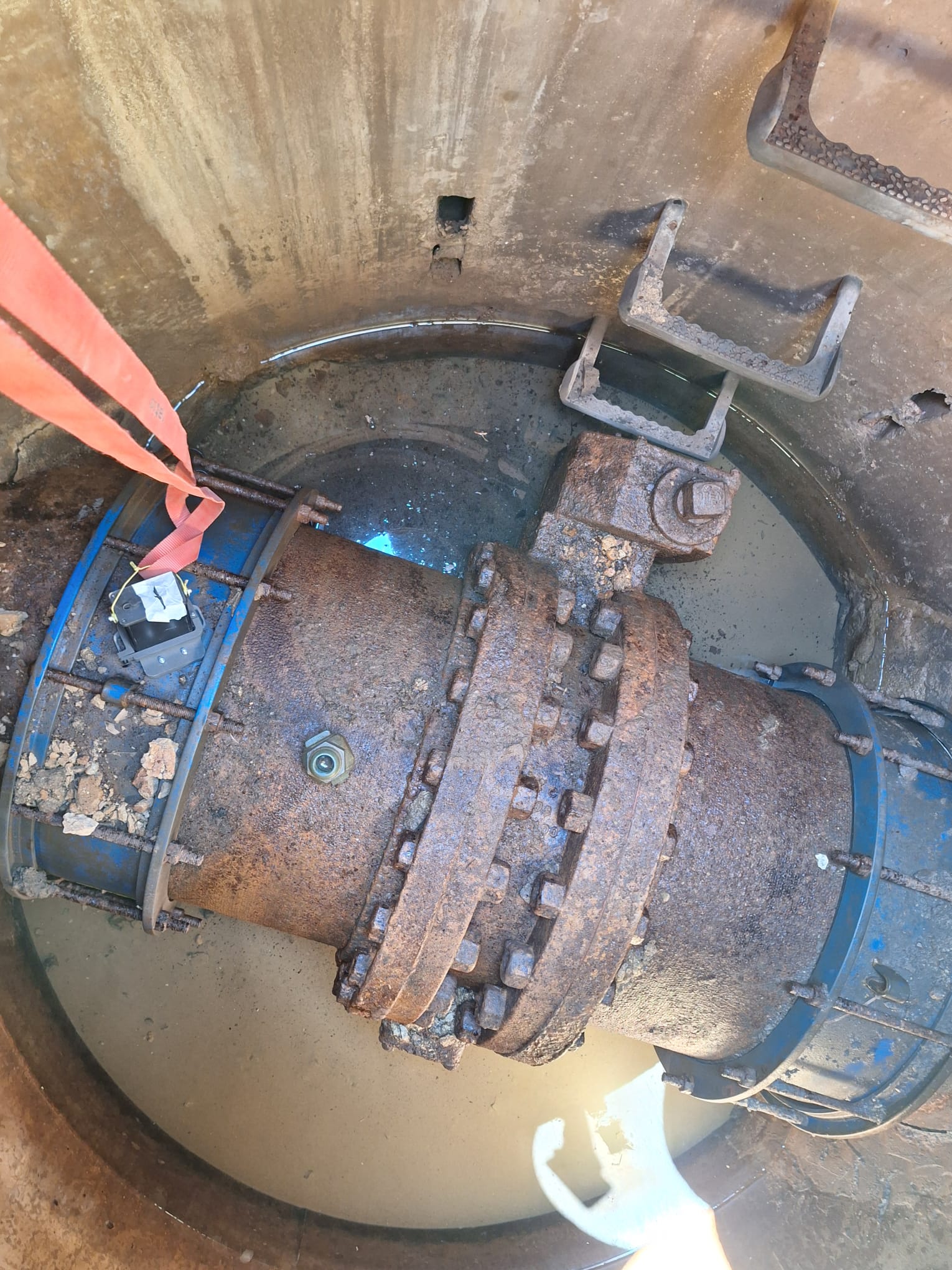
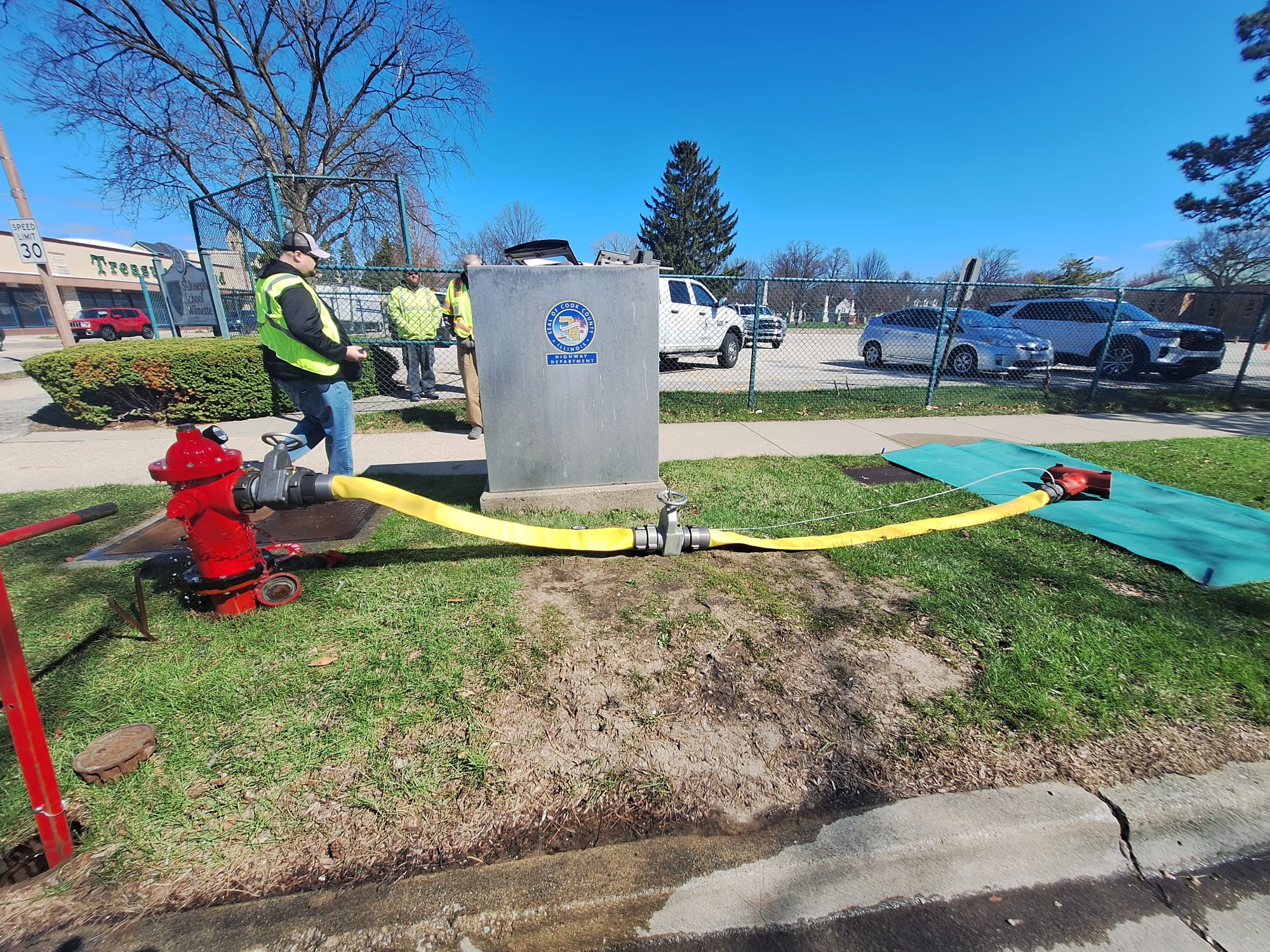
- Extraction: he sphere was successfully retrieved at the extraction point without affecting the service.
The pipeline inspected had the following characteristics:
Pipeline
Characteristics
Location
Wilmette, Illinois, USA
Pipeline material
Cast iron
Diameter
24 inches
Average water speed
0.52 – 0.66 ft/s
Average pressure
31.04 – 32.78 psi
Insertion point
Insertion hydrant
Extration point
Extraction hydrant
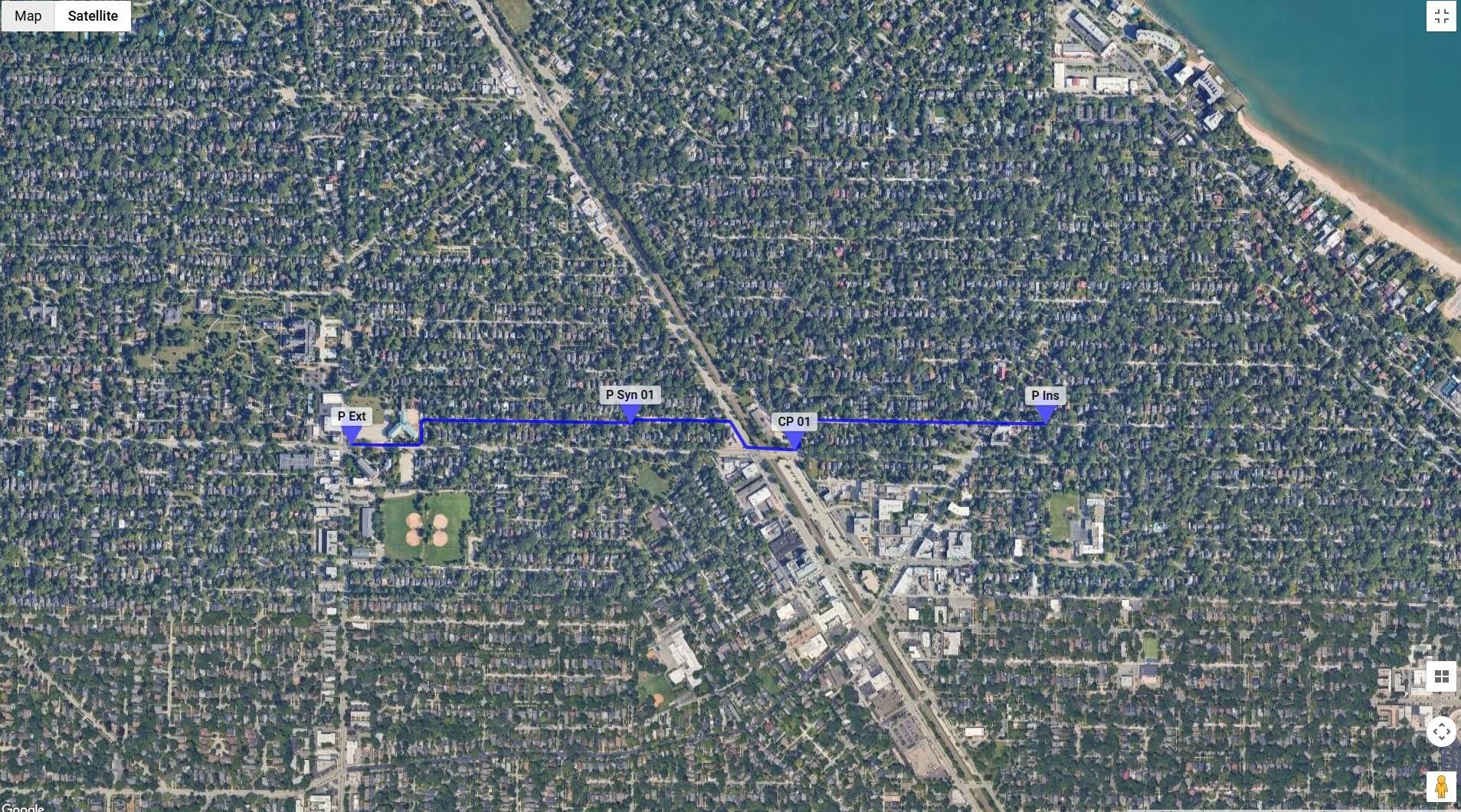
Inspected pipeline, synchronizers (P SYN), Insertion Point (P INS) and Extraction Point (P EXT).
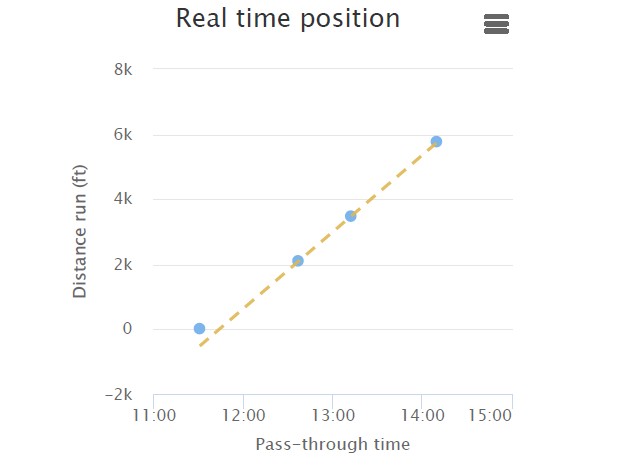
Real time position of Nautilus.
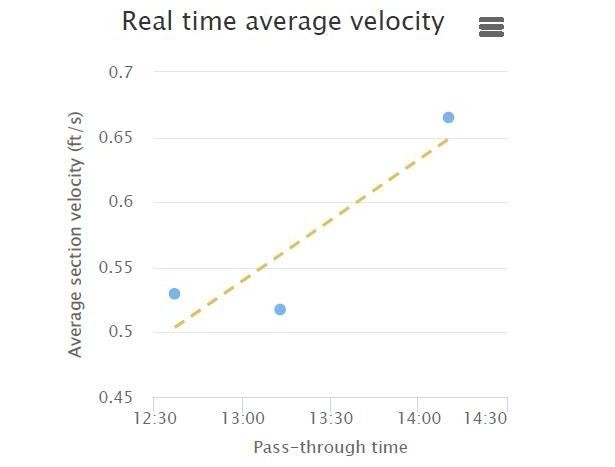
Average velocity during navigation of Nautilus.
Installation of synchronizers along the pipeline to ensure precise location of incidents.
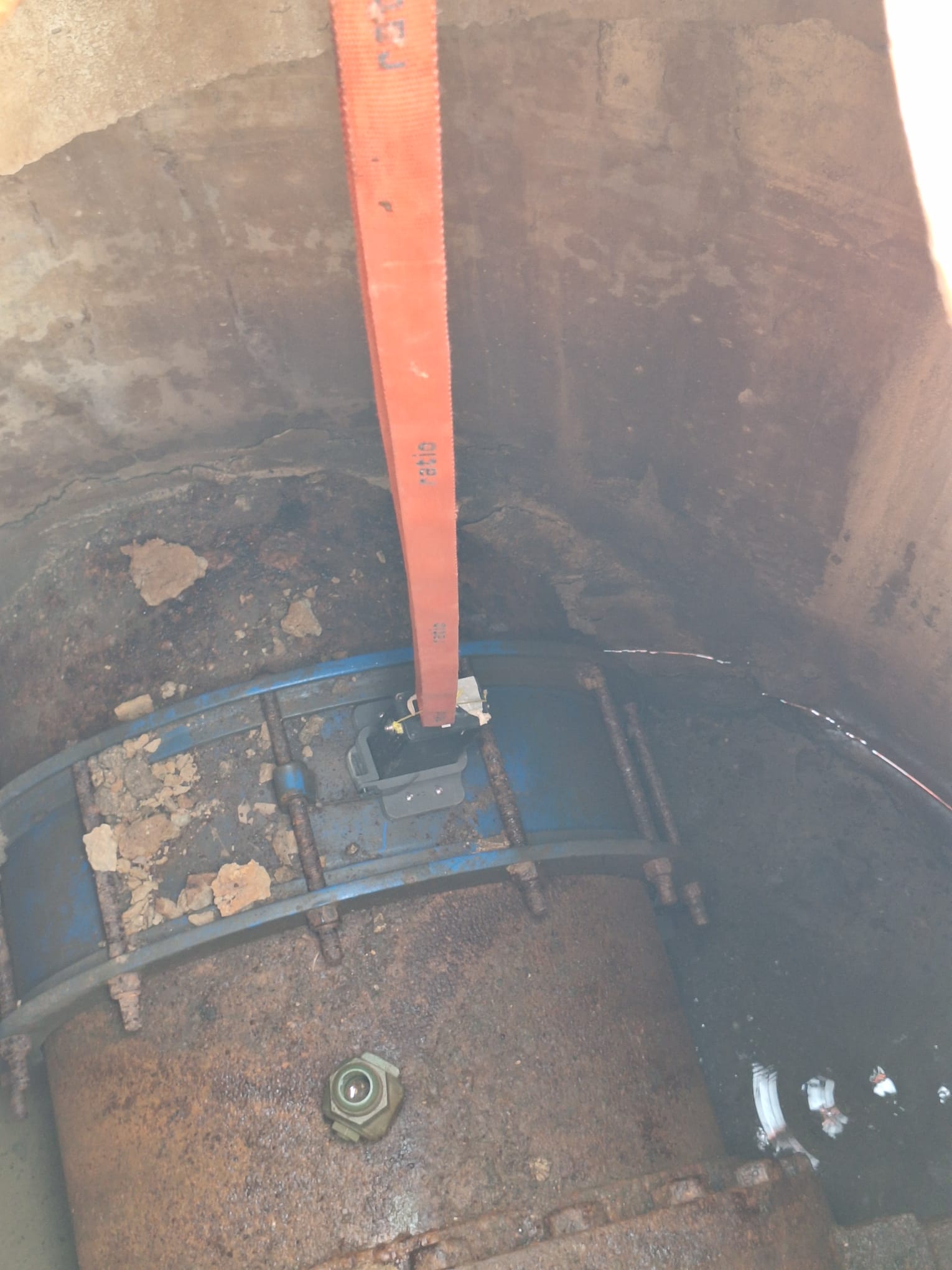
Installation of the extraction system
Results
Leaks
Incident Severity
F1
F2
F3
Total incidents
0
0
0
Air
Incident Severity
B1
B2
Total incidents
0
0
Anomalies
Incident Severity
A1
A2
Total incidents
0
0
The analysis of the data collected during the inspection did not identify any incidents along the inspected section.
Total incidents: 0
According to the data analysis the flow rate and speed remained relatively constant throughout the inspection, indicating stable hydraulic conditions.
The deployment of the Nautilus sensors throughout the pipe allows for precise location of anomalies or defects.
The integrated analysis, incorporating acoustic inspection, sediment screening, and magnetic anomaly screening, validated the structural integrity of the inspected section, with no consequential defects identified.
Conclusions
The inspection of the 24-inch transmission main in the Village of Wilmette was completed using Nautilus technology.
Approximately 5,765 ft of pipeline were inspected, and no leaks, air pockets, or anomalies were identified within the inspected section.
he results confirm the integrity of the pipeline and its stable hydraulic performance.
Due to operational constraints, part of the pipeline was not inspected. Therefore, it is recommended to inspect the remaining section of the pipeline and implement a periodic inspection program to support the early detection of potential deterioration.
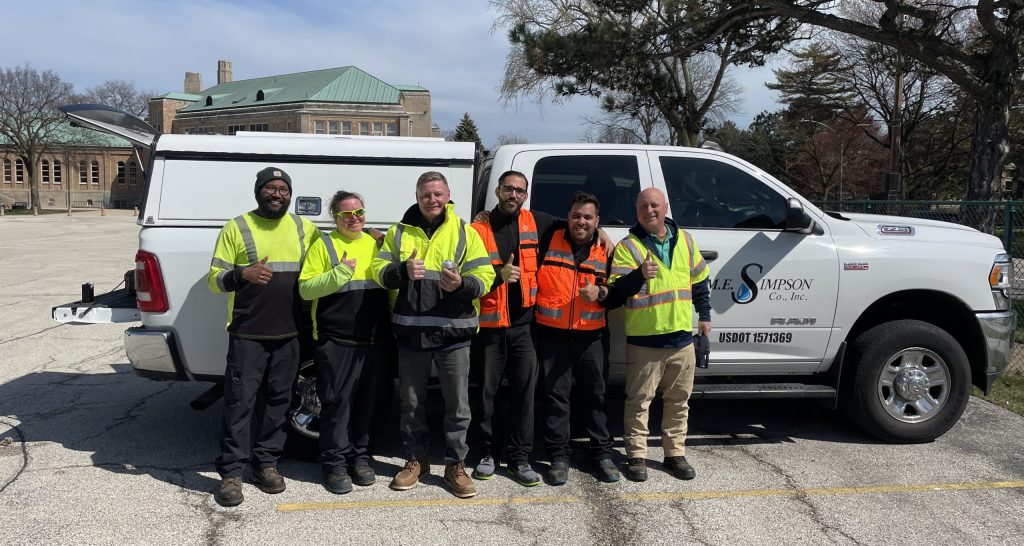
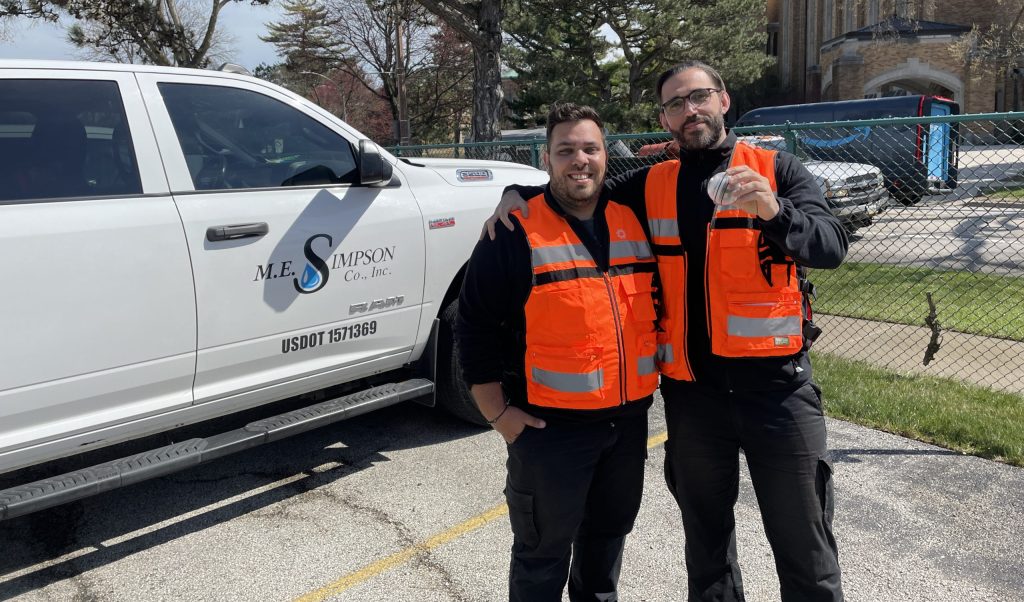
M.E. Simpson and Aganova teams during the inspection
Leaks detected by Aganova’s Nautilus system