Inline Inspection of a Water Transmission Pipeline for
Leak Detection in San Juan de Lurigancho, Peru
Executive Summary
As part of SEDAPAL’s Operational Sustainability Plan, the state-owned water utility responsible for water supply in Lima and Callao, a preliminary study was commissioned to detect non-visible leaks in a 6,659-meter potable water transmission line located in San Juan de Lurigancho.
This section, which runs along the right bank of the Rímac River, was inspected using the Nautilus system with the support of WES FES Group, Aganova’s local partner in Peru and the main contractor for SEDAPAL. The technology enabled precise detection of a significant number of major leaks, as well as anomalies in the prestressed concrete pipeline with diameters of DN800 and DN900.
The inspection revealed an estimated annual water loss of 1,377,650.16 m³/year, with a leakage flow rate of 43.69 l/s. A total of 17 events were identified: 13 leaks (7 classified as F1, 5 as F2, and 1 as F3) and 4 Type 1 anomalies. F1 leaks correspond to severe breaks with high flow rates, while F2 and F3 indicate medium and minor leaks, respectively.
These findings provide a strong foundation for planning repair and maintenance interventions,
significantly contributing to the reduction of Non-Revenue Water (NRW) and improving operational efficiency in Lima and Callao.
Client
Partner
Sections
CP – S.J.L.
Location
San Juan de Lurigancho, Peru
Date
June 28, 2024
Diameter
DN800 and DN900
Speed (m/s)
Min
Max
0.41
0.62
Pressure (bar)
Min
Max
2.20
3.90
Distance (m)
6,659
Introduction
SEDAPAL is a state-owned company governed by private law and fully owned by the Government of Peru. Its mission is to provide high-quality drinking water, sewerage, wastewater treatment, and reuse services to meet the needs of the population in Lima and Callao.
As part of its strategy to achieve operational sustainability and reduce potable water losses, SEDAPAL set out to implement targeted actions to reduce Non-Revenue Water (NRW), focusing specifically on districts with the highest leakage rates.
Challenge
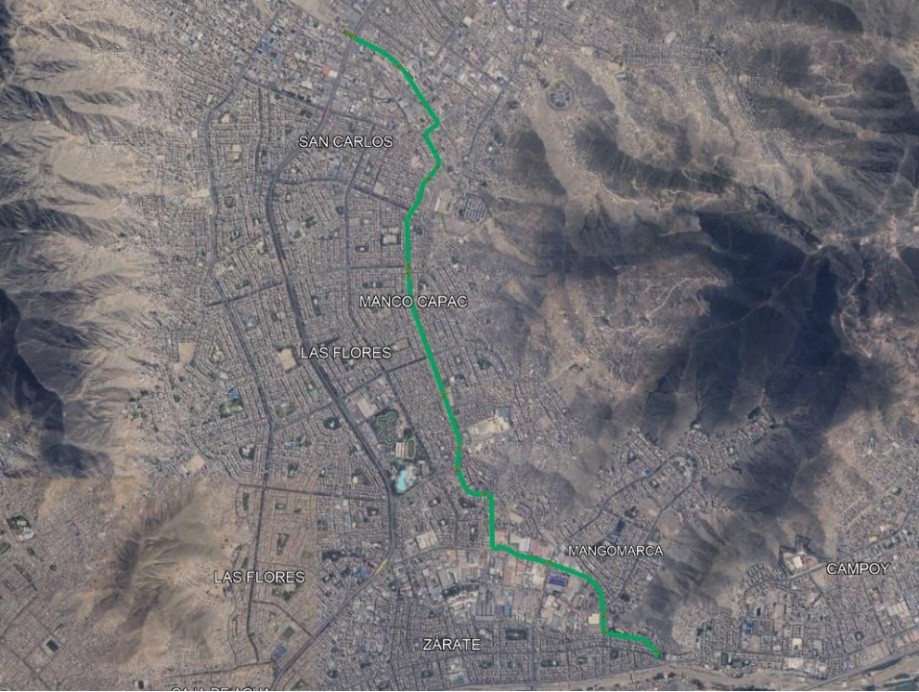
We selected TA 6,659-meter section of the water transmission line located in San Juan de Lurigancho, running along the Rímac River, for inspection.
Previously identified leaks at bell-andspigot joints had caused pavement subsidence and surface water emergence. Additionally, the network’s considerable age and lack of prior comprehensive internal inspection highlighted the need for immediate action.
Given SEDAPAL’s technical understanding of the network’s advanced deterioration, it was crucial to pinpoint the exact locations of the leaks and quantify their flow rates.
Solution and Implementation
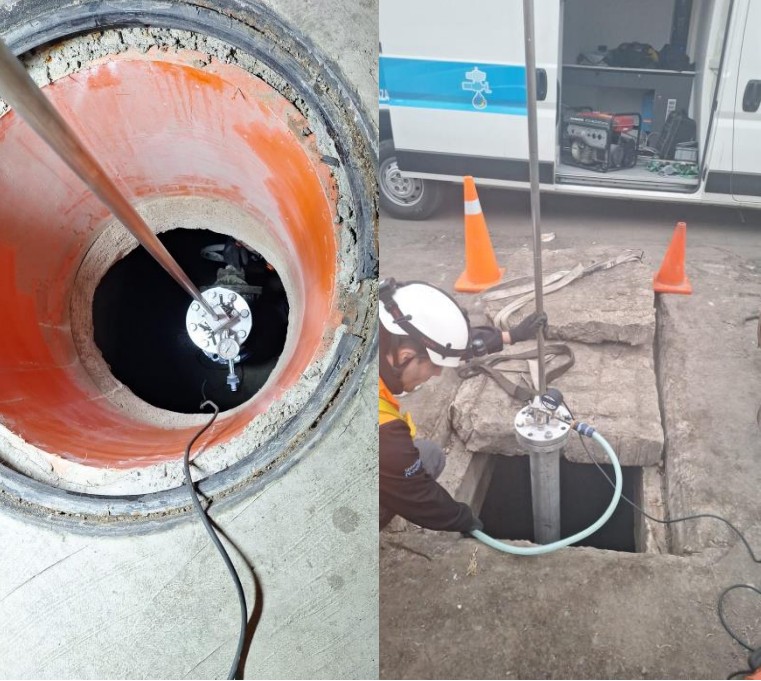
On June 27, 2024, a non-invasive internal inspection was carried out using our Nautilus system—an advanced technology specialized in acoustic leak detection and structural assessment of pressurized water networks, in collaboration with the Peruvian engineering firm WES-FES Group as local partner.
After validating the insertion and extraction points, the device was deployed at 10:30 p.m. and operated until 2:17 a.m., covering over six kilometers without interrupting water service.
Throughout its journey, Nautilus collected high-resolution acoustic and physical data, enabling the precise detection of hidden leaks, air pockets, and potential structural faults.
The pipeline inspected had the following characteristics:
Section
Location
San Juan de Lurigancho, Peru
Material
Prestressed concrete cylinder pipe (PCCP)
Flow rate
Between 0.41 and 0.69 m/s
Diameter
Between 800 and 900 mm
Water speed
0.47 m/s
Pressure
2.30 – 3.90 bar
Insertion point
DN150 gate valve
Extraction point
DN150 gate valve
Inspected Section
Image caption (left): Installation of the insertion system (left) and setup of the extraction system (right)
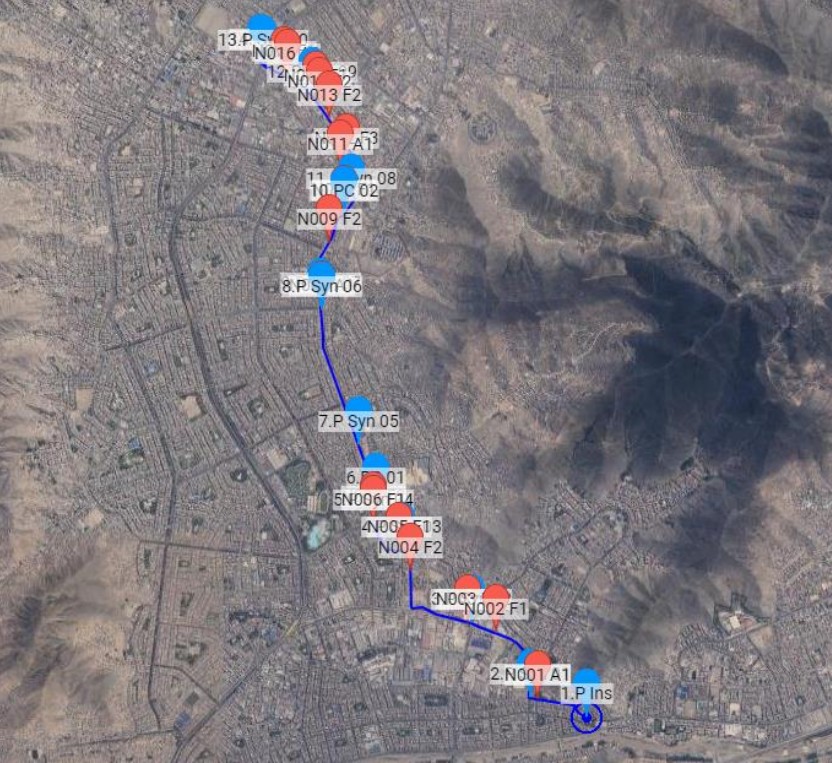
Aerial view of the inspected pipeline with detected incidents
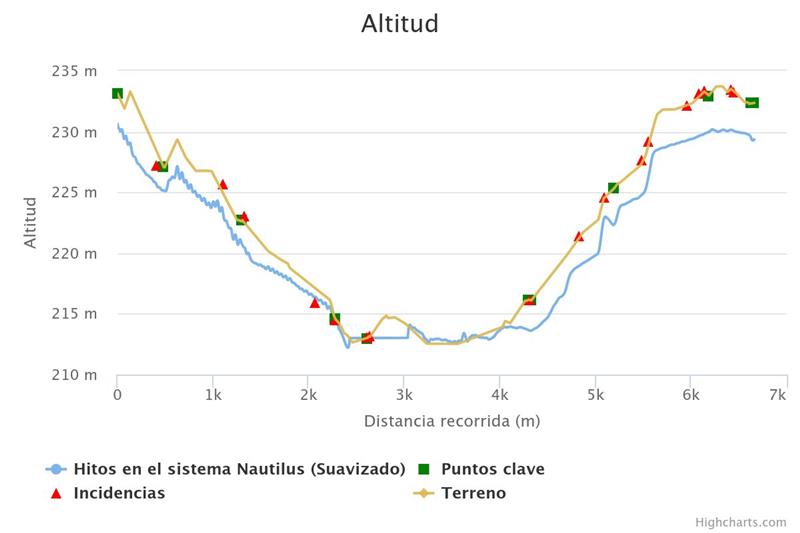
Pipeline elevation profile
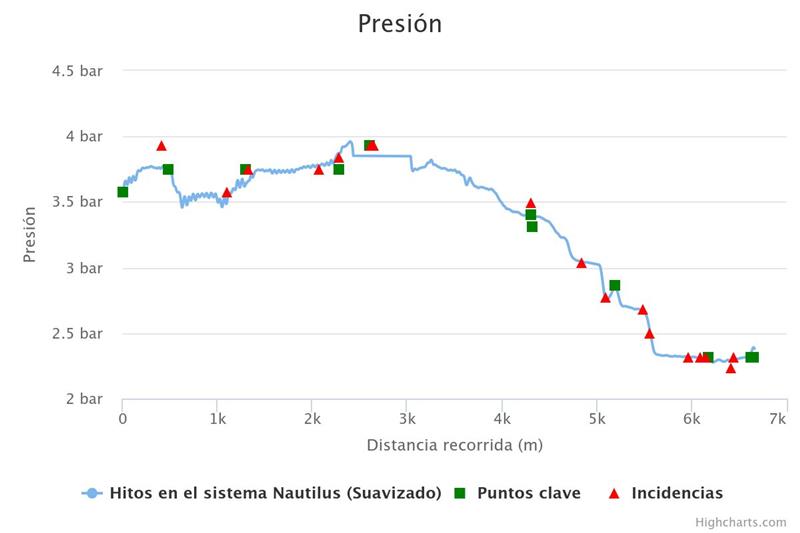
Pressure profile along the pipeline
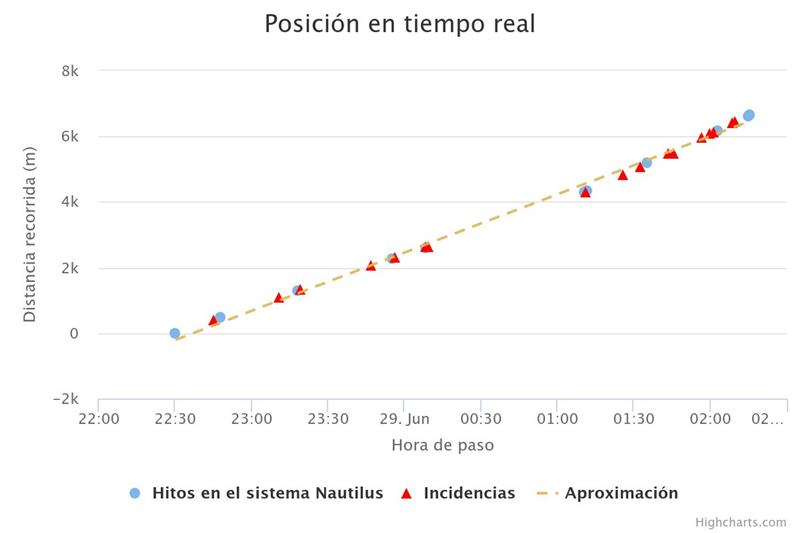
Real-time positioning data
Results
Leaks
Incident Severity
F1
F2
F3
13 total incidents
7
5
1
Anomalies
Incident Severity
A1
A2
4 total incidents
4
0
Above is an overview of the incidents detected, visualized through the Nemo Platform. The red markers on the map correspond to leak locations and anomalies identified during the inspection. The base map was provided by SEDAPAL’s GIS database.
The following chart displays the pipe’s elevation profile (in blue), based on the data collected by the Nautilus sphere, overlaid with the terrain profile (in brown).
Thanks to the integrated pressure sensor in the Nautilus system—which records pressure values at regular intervals during the inspection—it is possible not only to accurately estimate leakage flow rates but also to derive an approximate pressure profile of the pipeline based on hydraulic principles.
Conclusions
The inspection revealed a high number of critical issues along the San Juan de Lurigancho pipeline, all accurately located using the Nautilus system.
Aganova recommended prioritizing repairs of the most significant and accessible leaks, while minor ones were marked for periodic monitoring. It was also advised to expand the use of this technology across the broader SEDAPAL network.
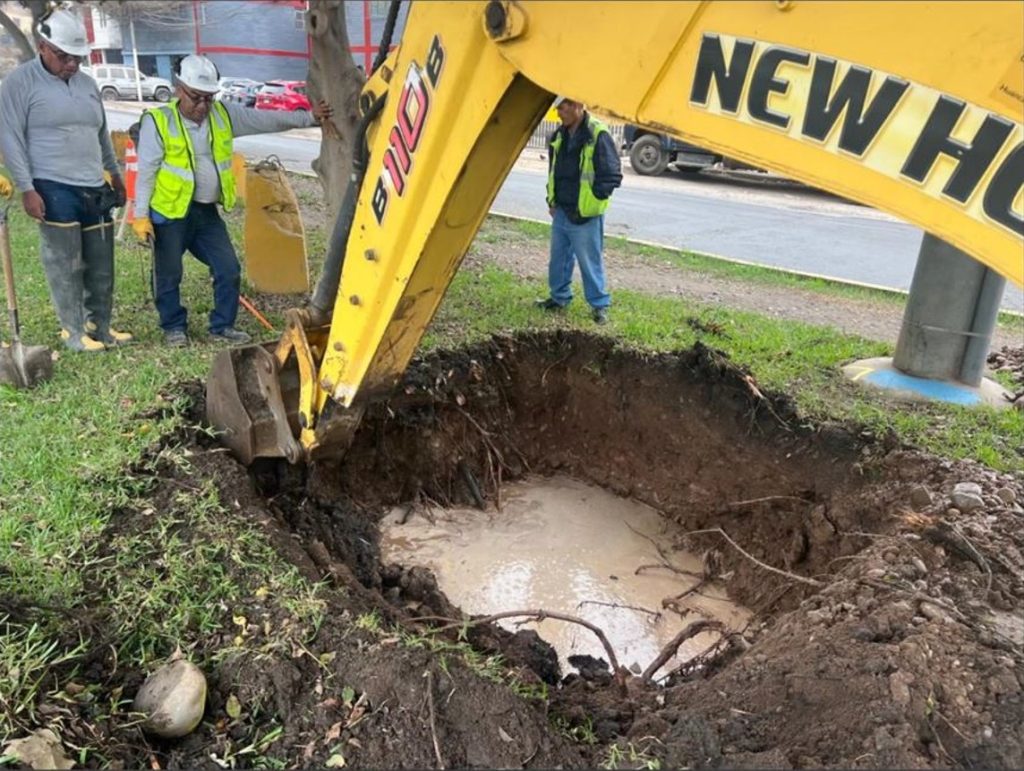
In line with these recommendations, SEDAPAL proceeded to repair the highest-impact leaks, with excavation results fully confirming the inspection findings.
The collaboration between SEDAPAL, WES FES Group, and Aganova enabled precise characterization of losses in this strategic pipeline section, providing a solid foundation for reducing NRW and enhancing the long-term sustainability of Lima and Callao’s potable water system.
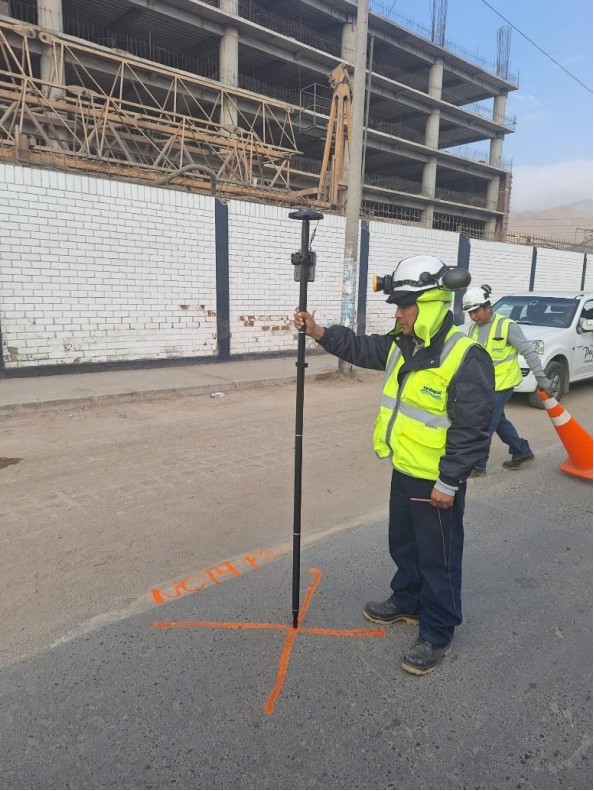
Pinpointing
Pinpointed excavation of the main identified leak