- Published in iAgua Magazine 52
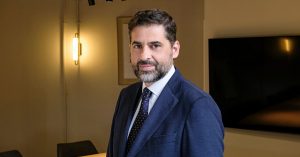
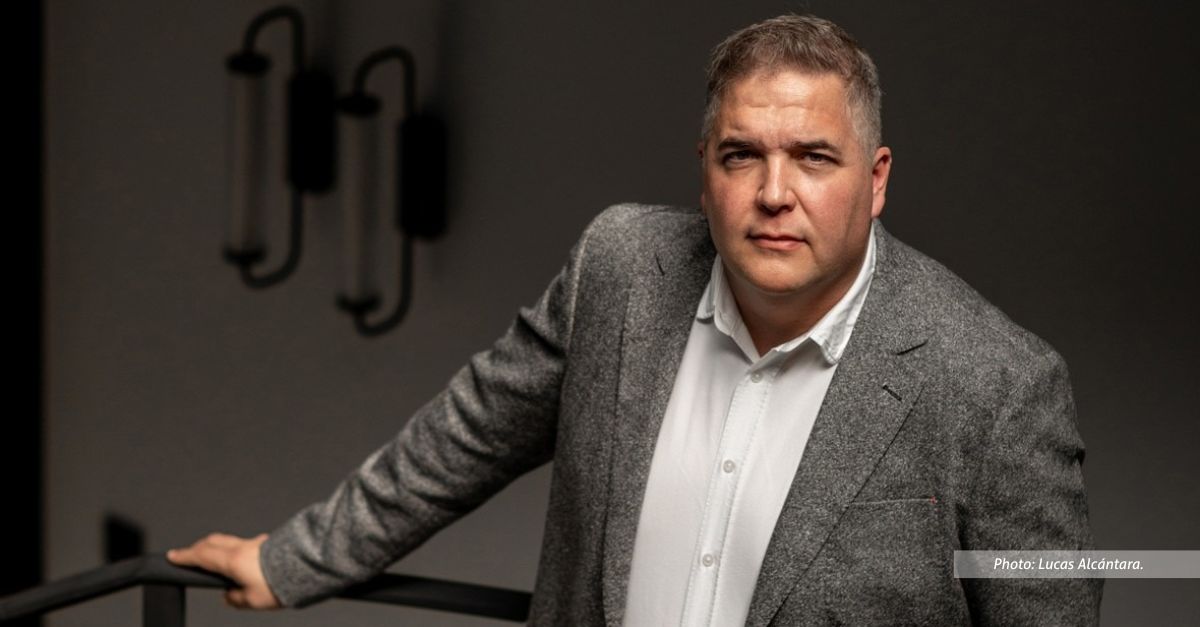
After weeks of heavy rain, the sun shines once again over Málaga. In the heart of the city’s Tech Park, one of Southern Europe’s key innovation hubs, we visit the headquarters of Aganova. There, we meet Agustín Ramírez, CEO of a company that has spent over 15 years developing technology to improve water management efficiency.
During our conversation, Agustín shows us an old valve and a decades-old water meter, objects that speak to his personal journey. His father worked for Málaga’s municipal water company, where Agustín himself began his career before setting out as an entrepreneur. He identified a specific challenge, efficient leak detection in water transportation networks, and bet on a technological solution that has since been adopted in over 60 countries.
Today, Aganova is far more than a leak detection company. Its approach has evolved to include replenishment projects, a new framework that emphasizes the value of recovered water not just from a technical perspective, but also from environmental, economic, and strategic angles. We spoke with Agustín about this evolution, the company’s collaboration with tech giants like Microsoft, and the need to attract talent in a sector that must reinvent itself to meet challenges such as resource scarcity, climate adaptation, and increasing infrastructure pressure.
Q: Aganova was founded in Málaga in 2008. How has the company evolved since then in terms of business model, technology, and global presence?
From the very beginning, Aganova has had a strong technological and international vision. Over the past 15+ years, we’ve grown from a startup offering a disruptive leak detection solution into a global reference in water efficiency and digitalization.
“We’ve gone from a disruptive startup to a global leader in water efficiency.”
Our business model has shifted from service provision to a value proposition based on proprietary technology, continuous innovation, and strategic partnerships. International expansion has been key: we now operate in more than 60 countries with strategic offices in Europe, Latin America, and the Middle East.
Q: You’re currently undergoing a bold international expansion, with new offices in Dubai and Brazil. What’s your global growth strategy, and which markets are you prioritizing?
Our strategy is rooted in proximity to the customer, understanding local challenges and delivering tailored solutions. Dubai opens doors to the Middle East, where water challenges demand cutting-edge technology. Brazil, meanwhile, is a priority in Latin America due to its size and infrastructure needs. We focus on regions where water is a critical resource and where utilities and governments are committed to digital transformation.
Q: Alongside international growth, you’ve strengthened your leadership team with high-level hires, such as Carlos Campos as Chairman and Alia López in the Middle East. How important is talent in your roadmap?
Talent is one of the cornerstones of our strategy. Bringing in global expertise and strategic vision, through leaders like Carlos Campos, Marcos Barrera, or Alia López, helps us manage growth with agility and strength. We seek professionals who share our passion for sustainability, technology, and social impact. We believe innovation is born from diverse, multidisciplinary, and highly skilled teams.
Q: You’re leading an innovative approach with your replenishment projects, which go beyond leak detection to integrate water efficiency, resource recovery, and sustainability. What does this concept involve, and how can it support strategic decision-making for utilities and public-private stakeholders?
Replenishment projects are a natural evolution of our value proposition. It’s not just about detecting leaks, it’s about quantifying recovered water and evaluating its environmental and economic impact. This enables clients to incorporate sustainability metrics into operational and investment decisions. In a context of global water scarcity, this holistic approach positions recovered water as a strategic asset aligned with ESG goals, EU taxonomy, and corporate water neutrality commitments.
Q: The agreement with Microsoft to accelerate water recovery through AI has sparked significant interest. How has this collaboration materialized, and what impact do you expect in terms of scalability, sustainability, and efficiency?
Our partnership with Microsoft represents a milestone in sustainable water management. Together, we launched a replenishment project in Spain, in collaboration with the Sorbe Water Consortium (MAS), aimed at detecting leaks more efficiently using AI-powered technologies. We also joined a major project in Dublin with Microsoft, Uisce Éireann, and Suez.
“In a world of water scarcity, recovered water becomes a strategic ESG-aligned asset.”
In Dublin, we’re inspecting transmission networks using our acoustic system, Nautilus, to significantly reduce non-revenue water. This supports Microsoft’s goal of becoming water positive by 2030 and strengthens water resilience in a city where up to 33% of water is lost before reaching consumers.
These initiatives are part of Microsoft’s broader water stewardship efforts and showcase how large tech players and deeptech specialists like Aganova can co-create scalable, impactful solutions.
With our proprietary technologies, Nautilus and Nemo, and Microsoft’s strategic and technological backing, we’re setting a new benchmark for efficiency, sustainability, and public-private collaboration.
Q: Your value proposition focuses on digital innovation for early leak detection and network performance optimization. How is demand for this type of solution evolving among utilities?
Demand has skyrocketed in recent years, driven by the need to upgrade aging infrastructure, adapt to climate change, and meet regulatory and sustainability goals. Utilities are increasingly open to digital tools like ours, which enable data-driven decisions, loss reduction, and better investment planning. Moreover, green finance frameworks favor these solutions, accelerating their adoption.
“There’s no cheaper water than the water you already have, and none more expensive than what’s lost through leaks.“
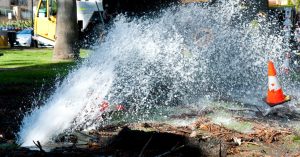
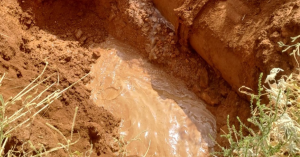
Undetected leaks mean wasted resources, higher operating costs, and greater network degradation. But with the right technology, every drop can be accounted for.
At Aganova, we help utilities take control of their infrastructure through advanced in-line leak detection and pipeline condition assessment. Detecting leaks early reduces non-revenue water, extends asset life, and ensures more sustainable and resilient water supply. We must protect our most valuable resource, because the most affordable water is the water that isn’t lost.
Q: From your perspective, where are the greatest needs and investment opportunities in the water sector? What regions or themes show the most development potential?
We see a growing need for investment in resilient water infrastructure and in modernizing distribution systems to reduce losses and improve efficiency. Latin America, Africa, and Southeast Asia offer significant opportunities due to rapid urbanization and water-related challenges.
Climate change awareness is also driving investment in solutions that promote water security and resilience. In this context, technological innovation and strategic alliances will be key to delivering effective, sustainable solutions.
Q: Aganova recently joined the Alliance for Water Stewardship. What commitments does this entail, and how does it align with your vision of sustainability and governance?
Joining the Alliance for Water Stewardship reinforces our commitment to responsible, collaborative water management. We are committed to leading by example, promoting practices that ensure long-term sustainability of the resource. This affiliation enables us to collaborate with key sector players, share knowledge, and contribute to global water governance standards. It fits perfectly with our vision: to create measurable, positive impact on ecosystems and communities.
Q: What barriers and opportunities do companies like Aganova face in working with the public sector? What should change to facilitate the adoption of innovative solutions?
“The biggest challenge remains the inertia of traditional models and administrative complexity.”
That said, awareness is growing that innovation is essential to address today’s water challenges. Opportunities arise when there is clear political will, supportive regulation, and agile funding mechanisms. To ease adoption, it’s critical to foster public-private collaboration models that allow for piloting new technologies, risk sharing, and faster sector transformation.
Q: Where do you see Aganova in ten years? What role do you want to play in the global water transformation?
In ten years, we aim to be a global leader in water intelligence. We want our solutions to be present wherever water is scarce or mismanaged. We aspire to drive the shift toward a circular water economy, where every drop counts and technology powers sustainability. Our role will be that of a catalyst for change, blending innovation, impact, and purpose.