Advanced Acoustic Inspection of a 29 km Raw Water Main in Edinburgh
Executive Summary
In March 2025, Aganova, in collaboration with UK-based Hydrosave, conducted a high-precision internal inspection of a 29.2-kilometer raw water main between Baddinsgill and Pateshill, Scotland. Commissioned by Scottish Water, the objective was to assess the condition of a DN600 cast iron pipeline transporting raw water by gravity through a remote rural area.
As part of Scottish Water larger inspection programme and the drive to test new technologies, Scottish Water selected Aganova to perform a comprehensive in-line diagnostic using its proprietary Nautilus technology — a next-generation inspection sphere capable of detecting leaks, air accumulations, and structural anomalies without disrupting service. To enhance accuracy, the system was supported by Synchronizers, acoustic calibration devices that enabled centimeter-level incident localization.
The campaign included four consecutive inspections over a four-day period, carried out under controlled hydraulic conditions. All data collected were processed and analyzed through Aganova’s Nemo digital platform, generating detailed incident maps and hydraulic profiles. This information provides Scottish Water with a robust, data-driven basis for targeted maintenance planning, risk mitigation, and long-term asset management.
Client
Partner
Sections
From Baddinsgill to Pateshill
Location
Edinburgh, Scotland
Date
March 17–20, 2025
Diameter
DN600
Sections
Pipeline Run 1
Pipeline Run 2
Pipeline Run 3
Pipeline Run 4
Speed (m/s)
Min
Max
0.60
0.66
0.62
0.65
0.55
0.86
0.53
0.94
Pressure (bar)
Min
Max
0.0
5.6
7.0
7.7
4.6
5.5
0.0
4.5
Distance (m)
7,842
9,812
7,090
4,466
Introduction
Scottish Water is a publicly owned water and wastewater services provider in Scotland. Established in 2002, it supplies drinking water and manages wastewater for households and businesses across the country. The company operates under the regulation of the Scottish Government and aims to ensure high-quality water services while maintaining environmental sustainability. Unlike private water companies in England, Scottish Water is publicly funded, reinvesting its revenue into infrastructure improvements and service enhancements.
The pipeline inspected is a cast iron pipe. Its function is to carry out raw water by gravity from Baddinsgill – Pateshill. Scottish Water was worried about the operation pressure of the line, which is suspected to be leaking, as it runs through a rural area where normal leak detection techniques are difficult to carry out.
Challenge
The pipeline section under review is a DN600 cast iron raw water main, designed to convey raw water by gravity from Baddinsgill to Pateshill. Located in a remote rural setting, this strategic infrastructure segment presented significant limitations for traditional leak detection methods, particularly due to its inaccessibility and the absence of consistent monitoring points.
Scottish Water identified the need for a non-invasive and high-precision diagnostic solution to obtain actionable insight into the internal condition of the asset.
In response, Aganova, in collaboration with its UK partner Hydrosave, was commissioned to carry out a comprehensive internal inspection using the Nautilus in-line acoustic leak detection system, capable of operating without service interruption while offering advanced detection capabilities.
Solution and Implementation
To address the diagnostic challenges, Aganova deployed its proprietary Nautilus technology—a state-of-the-art 70 mm diameter leak detection sphere designed to navigate with neutral buoyancy inside pressurized water pipelines, driven solely by the water flow. Equipped with a suite of high-sensitivity sensors, the sphere captures acoustic, pressure, magnetic, and inertial data throughout the inspection. This information is then processed using advanced algorithms developed by Aganova, allowing for the accurate identification, localization, and classification of internal anomalies.
The Nautilus system was further enhanced by Synchronizers, acoustic calibration devices installed at specific points along the pipeline. These devices emit timed signals that are recorded by the sphere, enabling centimeter-level pinpointing of each detected incident and improving the precision of the data analysis.
From March 17 to 20, 2025, four consecutive inspections were successfully completed, covering a total of 29.2 kilometers of pipeline. The process followed four key stages:
- Pre-inspection: The Hydrosave team conducted an initial pre-inspection phase, gathering system information and transferring data to Aganova for detailed planning. As part of this phase, they identified and closed secondary branches to ensure controlled navigation during the inspection. Once preparation was complete, inspections commenced as scheduled.
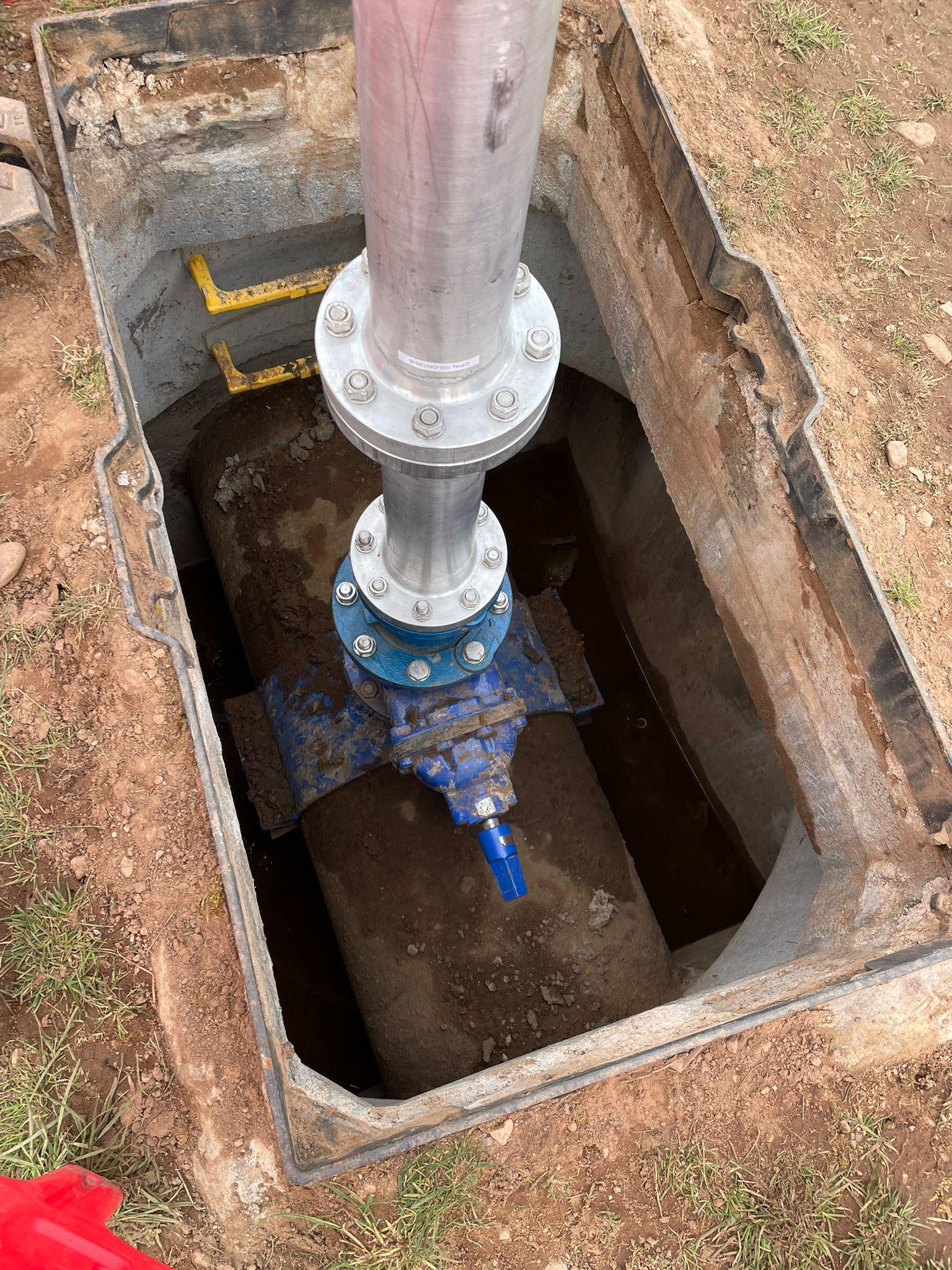
- Insertion and navigation: The certified Hydrosave team performed the inspection at a working flow rate of approximately 170 liters per second, ensuring stable conditions. Insertion and retrieval were carried out through DN150 gate valves, enabling full access to the raw water main without service disruption.
- Extraction and disassembly: After each navigation session, lasting between 4 and 5 hours, depending on the section, Nautilus was recovered without any operational issues. The device was then disassembled to extract the recorded data for analysis.
- Initial analysis: Aganova processed all data using the Nemo digital platform, generating detailed GIS maps that included the exact location and type of incidents detected, as well as pressure and elevation profiles along the entire inspected section.
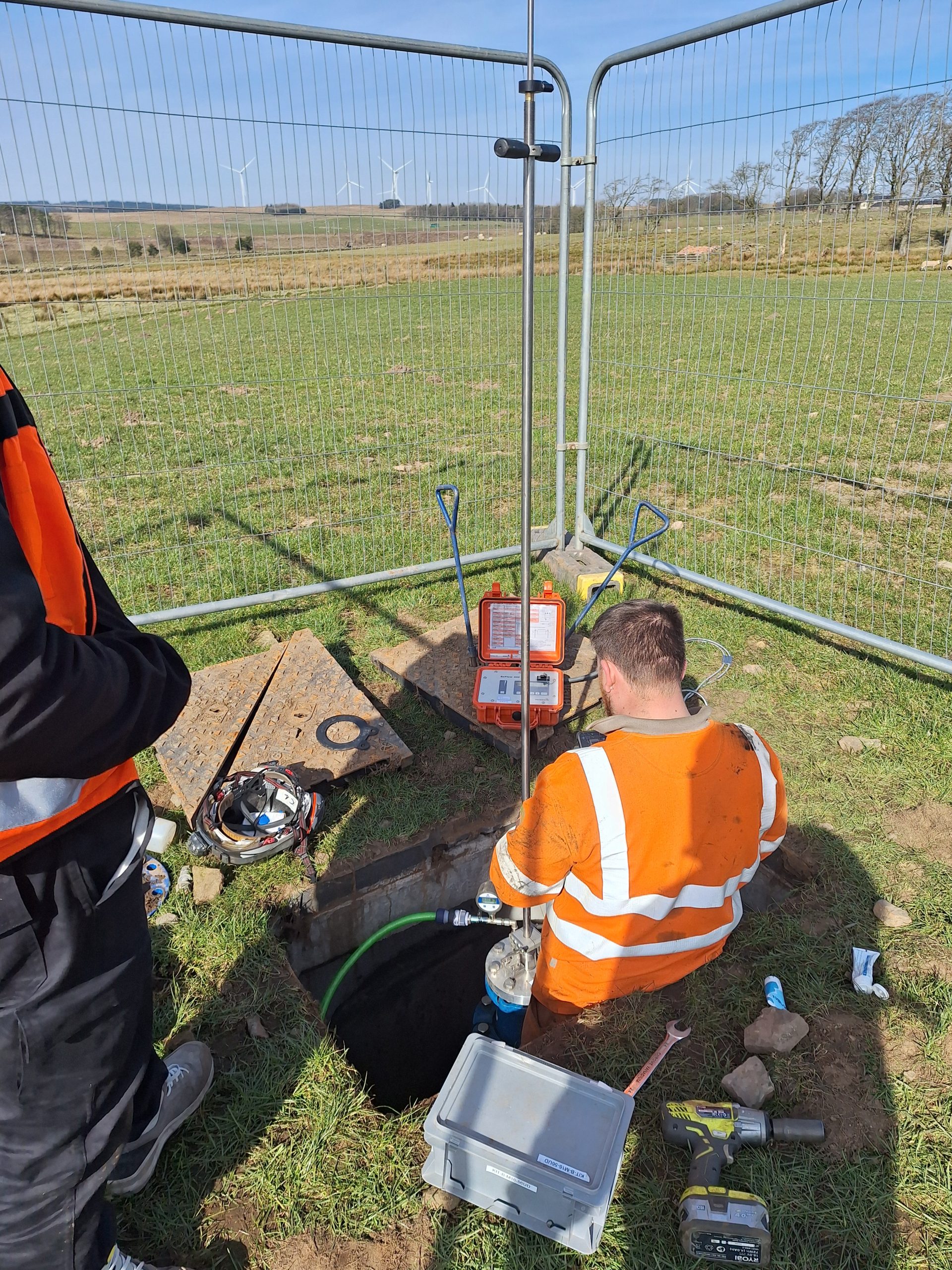
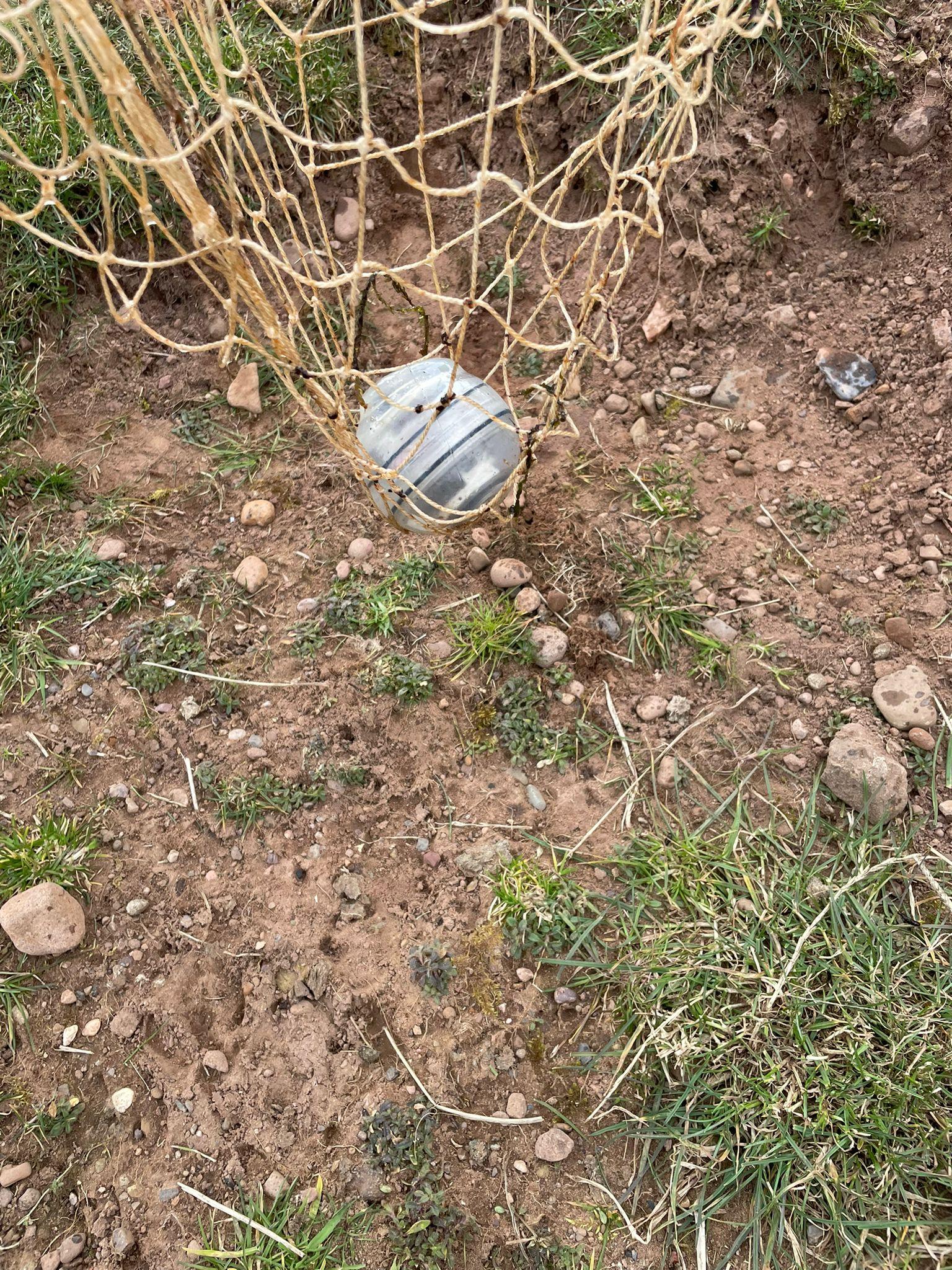
Intallation of the extraction net
Hydrosave technician preparing DN150 gate valve for Nautilus deployment
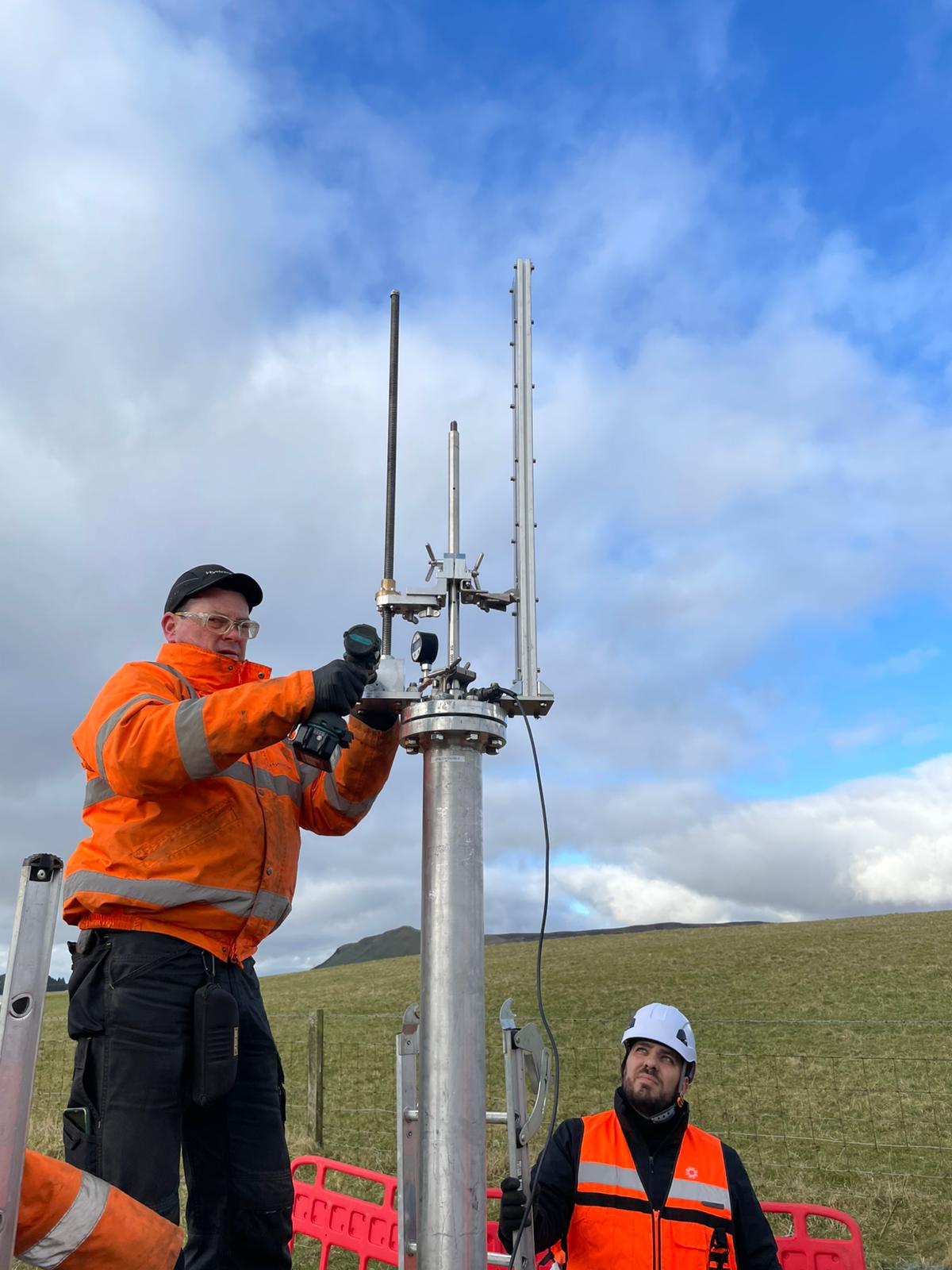
Nautilus insertion
Insertion setup for safe and controlled Nautilus navigation
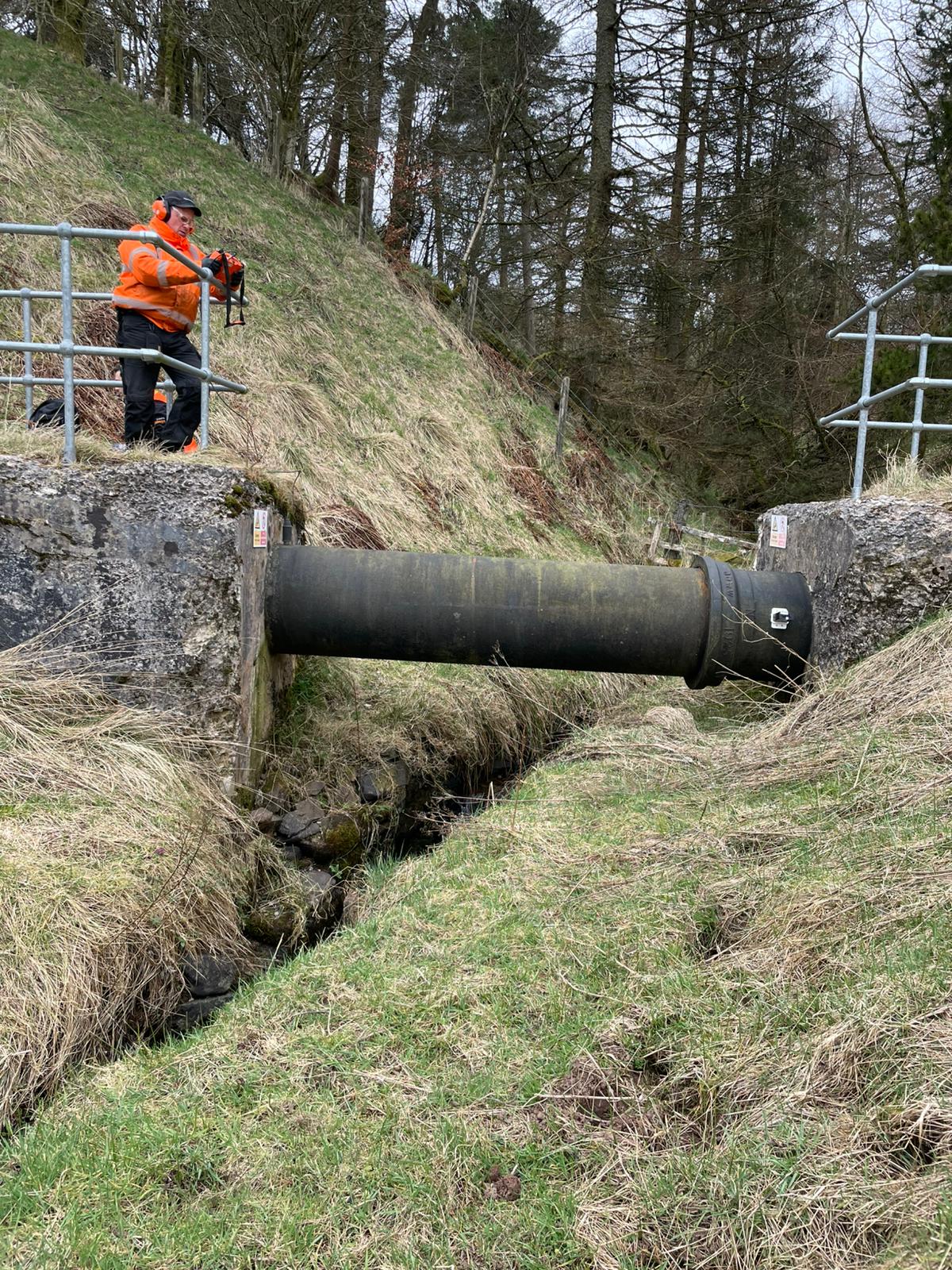
Part of the inspected gravity-fed raw water main between Baddinsgill and Pateshill.
Nautilus extraction
Results
Leaks
Incident Severity
F1
F2
F3
10 incidents
2
3
5
Air
Incident Severity
B1
B2
8 incidents
3
5
Anomalies
Incident Severity
A1
A2
2 incidents
2
0
The inspection campaign was successfully completed, covering the full 29.2 km length of the DN600 raw water and revealing a total of 20 relevant incidents, including 10 confirmed leaks. These findings provide valuable insight into the pipeline’s internal condition and performance, enabling Scottish Water to take targeted corrective and preventive actions.
A particularly notable outcome was observed during Run 4, which revealed a cluster of air- related anomalies, including air pockets and bubbles, within a short section of the pipeline. Scottish Water acted on this right away and installed a new air valve in this location to ensure air in the main is managed better and mitigate any possible efficiency losses.
All incidents were categorized according to severity and nature, and precisely mapped on Aganova’s Nemo digital platform, which also includes pressure and elevation profiles. This actionable dataset supports decision-making for both short-term repairs and long-term asset management planning.
Incident summary:
- 2 leaks (F1): Major leaks or potential pipe bursts with estimated losses > 11 m³/h, scheduled for urgent repair.
- 3 leaks (F2): Medium-severity leaks with estimated losses between 5.5 and 11 m³/h, scheduled for repair or close monitoring.
- 5 leaks (F3): Minor leaks with losses < 5.5 m³/h, scheduled for monitoring and future intervention.
- 3 air pockets (B1): Significant air accumulations that may impact flow capacity and exacerbate pressure surges, monitoring and air valve assessment recommended.
- 5 air bubbles (B2): Minor, non-critical inclusions typically with no immediate risk, recommended for continued monitoring.
- 2 anomalies (A1): Unidentified acoustic signals likely linked to non-critical internal events, scheduled for further monitoring or investigation.
Conclusions
This project marks a major milestone in the systematic deployment of smart technologies for the internal condition assessment of trunk main and raw water mains in the United Kingdom. Through the collaboration between Aganova and Hydrosave, Scottish Water now benefits from a high-resolution and actionable diagnostic of a critical DN600 pipeline, enabling significant reductions in non-revenue water, optimized resource allocation, and more effective maintenance planning.
The insights gained lay a robust foundation for a long-term, data-driven asset management strategy. Regular inspections using non-invasive solutions like Nautilus, enhanced by centimeter-level precision through Synchronizers and advanced data processing in the Nemo platform, emerge as a key enabler to ensure operational efficiency, infrastructure resilience, and the sustainable delivery of water services.
Ian Dunsmore
Technical Team Manager (Strategic Water Infrastructure) | Water Service Strategy
“The collaboration between Scottish Water, Aganova, and Hydrosave on the recent inspection of our raw water main has been excellent. The professionalism and technical precision demonstrated throughout the project have delivered immediate value. The identification of leaks and air-related anomalies—particularly the cluster of air pockets discovered during Run 4—has resulted in the installation of an air valve to mitigate these issues thus increasing the operational capacity of the main. This is a great example of how collaborative working and smart diagnostics can drive real operational improvements.”