Non-Revenue Water Reduction: The definitive guide to municipal water loss management
Introduction: The structural challenge of non-revenue water
Non-revenue water reduction has become a strategic priority for water utilities worldwide. In a context of increasing water stress, regulatory pressure, and the need for financial sustainability, managing water losses is no longer just a technical concern—it is an environmental and social responsibility.
International benchmarks show that many municipal systems lose between 20% and 40% of treated drinking water before it reaches end users. This phenomenon, known as Non-Revenue Water (NRW), represents one of the most critical challenges in modern water utility management.
This guide provides a comprehensive overview of:
- What non-revenue water is and how it is structured
- Why non-revenue water reduction is critical for sustainability
- Technical and technological strategies for effective water loss control
- How to implement structured water loss control solutions
- The role of innovation in advanced leak detection
- Best practices for municipal operators
What is non-revenue water (NRW)?
Non-revenue water represents the difference between the volume of water entering the distribution system and the volume billed to customers.
It is typically divided into three components:
Real Losses
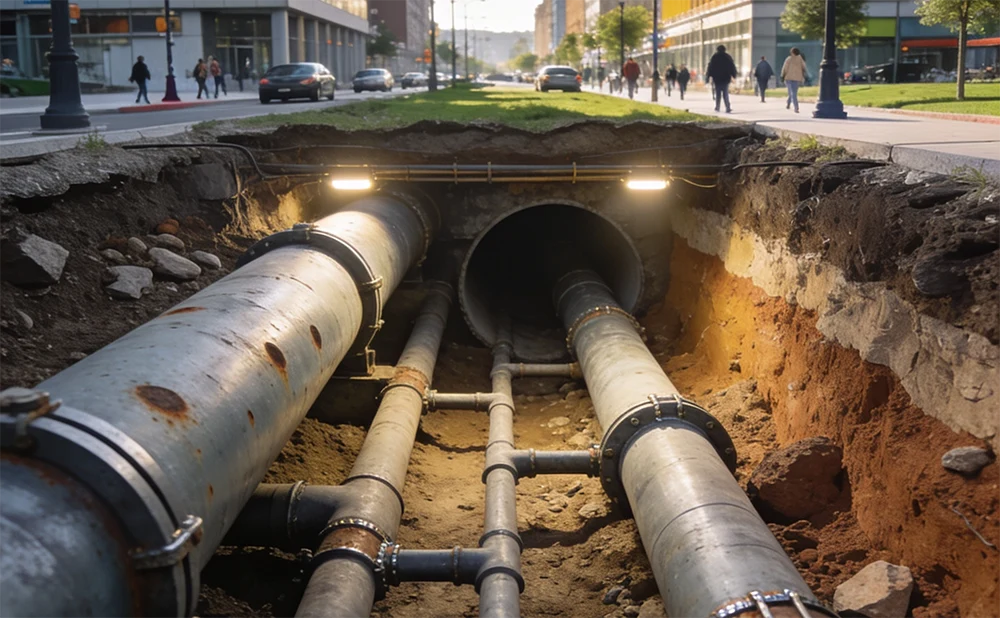
- Leaks in distribution mains
- Leaks in service connections
- Breaks in trunk mains
- Storage tank overflows and leaks
Apparent Losses
- Meter inaccuracies
- Unauthorized consumption
- Data handling and billing errors
Authorized Unbilled Consumption
- Municipal uses
- Firefighting
- Public irrigation
In most systems, real losses account for the largest financial and operational impact. Therefore, any robust non-revenue water reduction strategy must prioritize the identification and mitigation of structural leaks.
The strategic impact of non-revenue water
Municipal water loss management affects three core dimensions: financial, environmental, and operational performance.
1. Financial Impact
Every cubic meter of lost water represents sunk costs in abstraction, treatment, and pumping. High NRW levels reduce revenue streams and increase the cost per billed cubic meter.
2.Environmental Impact
Water that is extracted, treated, and pumped but never consumed contributes to unnecessary energy use and increased carbon emissions. Water loss reduction directly reduces the environmental footprint of utilities.
3.Operational Impact
Persistent leaks cause pressure instability, accelerate asset deterioration, and increase the frequency of network failures. Over time, this leads to reactive maintenance cycles and inefficient capital allocation.
For these reasons, non-revenue water reduction must be approached as a structured, long-term strategy rather than isolated maintenance actions.
From reactive response to predictive management
Traditionally, municipal water loss management has relied on reactive approaches, repairing leaks once they become visible. However, aging infrastructure and complex urban networks demand a more advanced methodology.
Modern water loss control solutions are built upon:
- Advanced district metering and sectorization
- Continuous monitoring systems
- Early leak detection technologies
- Data analytics and predictive modeling
This shift toward predictive management is essential for sustainable non-revenue water reduction.
Advanced technologies for non-revenue water reduction
Technological innovation has significantly transformed how utilities approach water loss reduction. Today, critical infrastructure can be inspected without service interruption, and leaks can be located with high precision.
Internal inspection in large-diameter mains: Nautilus
In trunk mains and large transmission pipelines, leaks may remain undetected for years. Traditional inspection methods often require system shutdowns, causing operational disruptions.
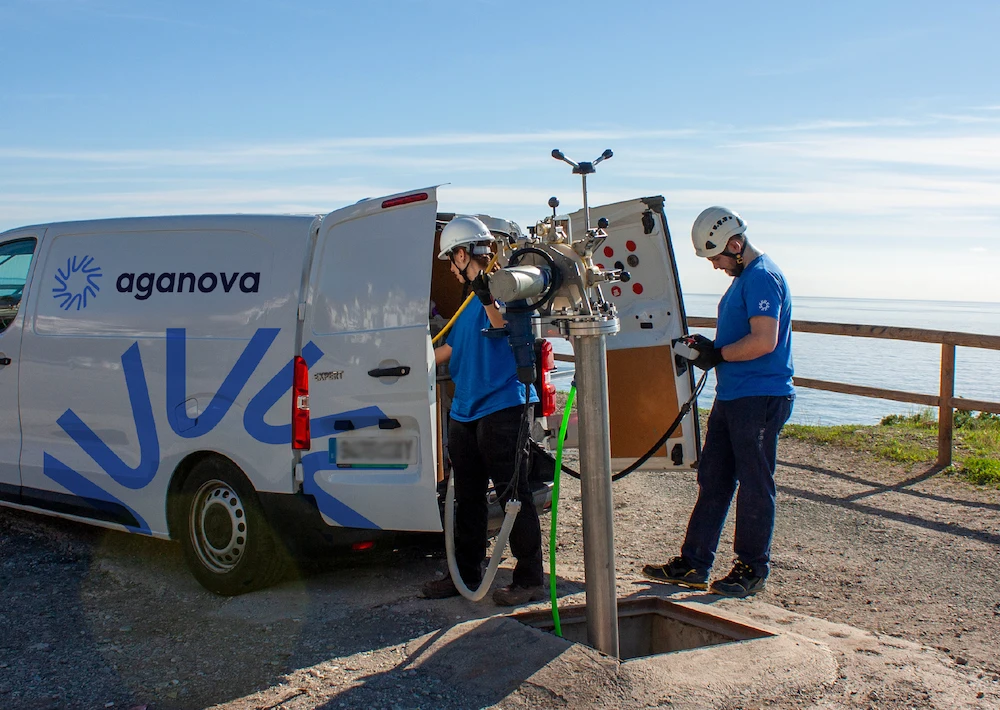
Nautilus enables internal inspection of pressurized pipelines without interrupting service. This capability is particularly critical for strategic infrastructure where continuity of supply is non-negotiable.
By integrating Nautilus into a structured non-revenue water reduction program, utilities can identify hidden structural leaks, prioritize investments based on real data, and significantly reduce losses associated with major assets.
International projects in São Paulo, Paris, Curitiba, and Dublin have demonstrated how internal inspection supports effective water loss control solutions in complex urban systems.
Nautilus in action: International benchmark projects
The effectiveness of Nautilus has been validated through some of the most relevant non-revenue water control programs worldwide, supporting large-scale non-revenue water reduction strategies across complex urban networks.
São Paulo – Project with Amazon and SABESP
In collaboration with Amazon and SABESP, Aganova deployed Nautilus in São Paulo to inspect critical large-diameter transmission mains.
The project enabled the identification of previously undetected leaks, strengthening the city’s non-revenue water reduction strategy within one of the largest metropolitan water systems in the world.
Paris – Five-Year strategic contract with SEDIF
Aganova was awarded a five-year contract with SEDIF for the diagnosis of Paris’ water transmission network.
Systematic in-line inspection under pressure has transformed municipal water loss management into a structured, data-driven process, enabling asset renewal decisions based on real structural condition rather than assumptions.
Curitiba – Advanced leak detection in urban network
In Curitiba, Nautilus enabled the detection of leaks in strategic infrastructure where conventional methods had proven insufficient.
The internal inspection approach accelerated non-revenue water control in critical sectors, supporting a measurable water loss reduction program in a complex urban environment.
Dublin – Strategic alliance with Microsoft, Uisce Éireann and SUEZ
In Dublin, Aganova participated in a joint initiative with Microsoft, Uisce Éireann, and SUEZ to strengthen water loss reduction across the network.
The integration of advanced inspection technology and digital capabilities consolidated a modern, data-driven approach to municipal water loss management.
High-precision electro-acoustic leak detection: Jabega
In dense urban environments, network complexity requires advanced localization techniques.
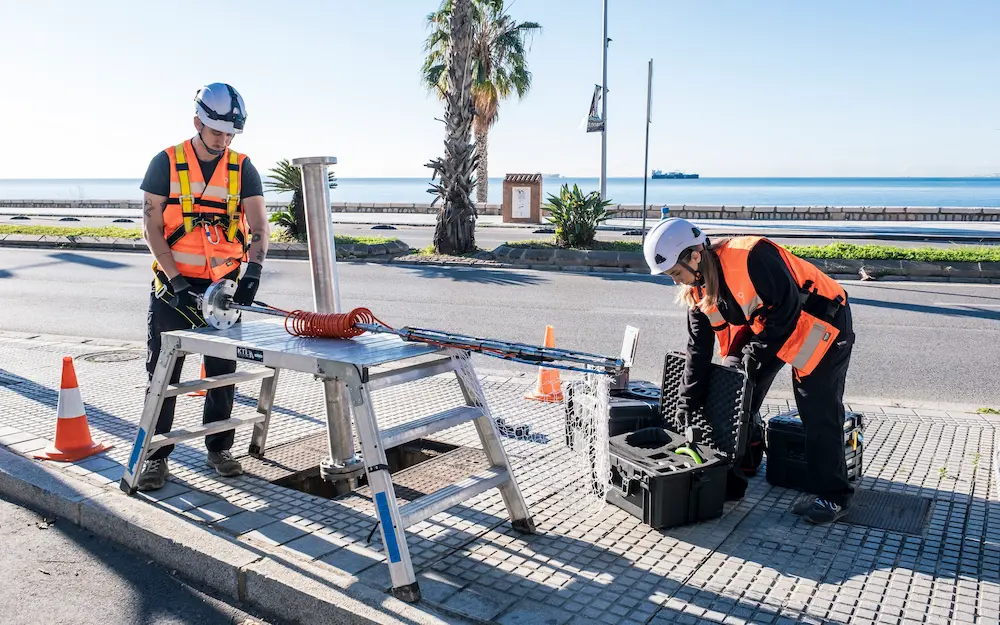
Jabega combines acoustic and electromagnetic technologies to detect leaks with high accuracy. This reduces unnecessary excavations and shortens repair times, enhancing operational efficiency.
As part of an integrated water loss reduction strategy, Jabega strengthens the detection of real losses in secondary distribution networks and high-risk sectors.
Continuous monitoring and early detection: Nemo
The transformation from reactive to predictive management is completed through permanent network monitoring.
Nemo enables continuous monitoring of hydraulic behavior, identifying anomalies before they escalate into major failures. By reducing leak exposure time, utilities can minimize total loss volumes and improve asset management decisions.
Integrated within broader water loss control solutions, Nemo supports real-time data-driven non-revenue water reduction programs.
Advanced technologies for non-revenue water reduction
Technology alone does not guarantee results. Successful non-revenue water reduction requires integration with management systems and clearly defined performance indicators.
Key KPIs include:
- Percentage of non-revenue water
- Infrastructure Leakage Index (ILI)
- Time to detect leaks
- Time to repair leaks
- Minimum night flow in district metered areas
Continuous monitoring of these metrics allows utilities to transform municipal water loss management into a measurable, optimized process.
Implementing a structured water loss reduction program
An effective program typically follows four stages:
- Comprehensive water audit and system assessment
- Prioritization based on hydraulic criticality and ROI
- Deployment of advanced water loss control solutions
- Continuous monitoring and improvement
The success of non-revenue water reduction depends not only on technology but also on governance, data culture, and sustained operational commitment.
Quantifiable benefits of non-revenue water reduction
When implemented effectively, non-revenue water reduction generates measurable benefits:
- Increased revenue without tariff adjustments
- Lower energy consumption
- Reduced carbon footprint
- Enhanced drought resilience
- Optimized capital expenditure through data-driven prioritization
Municipal water loss management, when properly structured, transforms inefficiency into strategic advantage.
Digitalization and the future of water loss reduction
The future of water utilities lies in digitalization. The integration of IoT, artificial intelligence, and predictive analytics will allow utilities to identify risk patterns before failures occur.
In this scenario, non-revenue water reduction becomes a continuously optimized parameter rather than a reactive objective.
Utilities that embrace digital water loss control solutions will evolve toward more resilient, financially sustainable, and environmentally responsible operating models.
Conclusion: Efficiency as strategic advantage
Non-revenue water reduction is one of the most powerful levers available to water utilities. It goes beyond leak repair, it reshapes how networks are understood, monitored, and managed.
Effective water loss reduction requires:
- Rigorous diagnostics
- Advanced inspection technologies
- Continuous monitoring
- A data-driven operational culture
Through integrated solutions such as Nautilus, Jabega, and Nemo, utilities can move toward a more precise, predictive, and sustainable model of municipal water loss management.
In a world facing growing water scarcity, investing in efficiency is not merely a technical decision, it is a strategic imperative.