Advanced Acoustic Inspection Detects Critical Leaks in a Drinking Water Network in Manzanares, Spain
Executive Summary
In many rural and semi-urban areas of Spain, drinking water distribution networks rely on aging infrastructure that poses an increasing risk of undetected leaks.
In this context, ACCIONA, in collaboration with Aganova, carried out the inspection of a main water pipeline in the municipality of Manzanares (Ciudad Real, Spain), using Aganova’s non-invasive Nautilus technology.
The intervention covered a 4.18-kilometer section of DN600/DN400 asbestos-cement pipe, with a flow rate of 400 m³/h. A total of 17 incidents were detected, including 4 high-severity leaks (F1) and 1 medium-severity leak (F2). The located losses were affecting the system’s supply capacity and compromising service continuity.
Thanks to this initiative, repairs are already underway that are expected to recover up to 3,000 m³ of water per day, optimizing network performance and strengthening system resilience. This estimate was validated by field flow meter measurements, confirming the loss calculations performed by the Nemo platform’s artificial intelligence.
Client
Section
Single section
Location
Manzanares, Ciudad Real, Spain
Date
August 14, 2025
Diameter
DN400 – DN600
Speed (m/s)
Min
Max
0.16
0.53
Pressure (bar)
Min
Max
1.1
3.7
Distance (m)
4,184
Introduction
In the municipality of Manzanares, Ciudad Real, the drinking water network includes pipeline sections that, due to their age and construction material, pose a risk of structural deterioration and undetectable water losses. Efficient management of these assets is essential to ensure uninterrupted service delivery.
With this challenge in mind, ACCIONA—the system operator—decided to implement an advanced internal diagnostic solution capable of providing accurate insights into the actual condition of a strategic pipeline over four kilometers long. To achieve this, they partnered with Aganova and its Nautilus technology, a system specialized in detecting leaks in pressurized networks.
Challenge
The inspected section—an asbestos-cement DN600/DN400 pipeline spanning 4.18 kilometers—conveys a flow of 400 m³/h toward the urban center of Manzanares. Undetected losses were compromising the system’s operational efficiency and posed a threat to the continuity of supply.
Moreover, the section lacked updated plans and presented technical constraints that ruled out the use of conventional leak detection methods. A non-intrusive solution was required—one capable of operating without service interruption, while delivering high precision and adaptability to the network’s real conditions.
Solution and Implementation
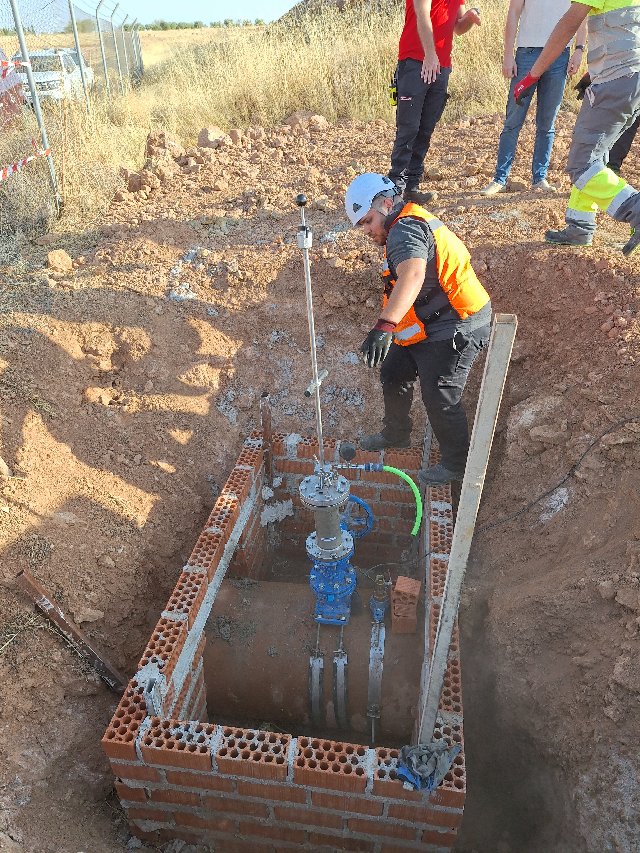
On August 14, 2025, Aganova deployed its Nautilus system, which traveled the entire 4,184-meter section of the network without interrupting service. The sphere was successfully inserted and extracted through an air valve and a bypass, respectively, operating for approximately 3 hours.
To ensure optimal accuracy in incident location, several synchronizer devices were installed along the section. Navigation was carried out at a constant flow rate of 400 m³/h and an average pressure of 3.5 bar.
The system inspected a total of 3,513 metres of pipeline.
The pipeline inspected had the following characteristics:
Pipeline
Characteristics
Location
Manzanares, Ciudad Real (Spain)
Pipeline material
Asbestos-cement
Diameter
DN600 – DN400
Average water speed
0.4 m/s
Average pressure
3.5 bar
Flow rate
400 m³/h
Inspected pipeline, detected incidents, synchronizers, P INS and P EXT
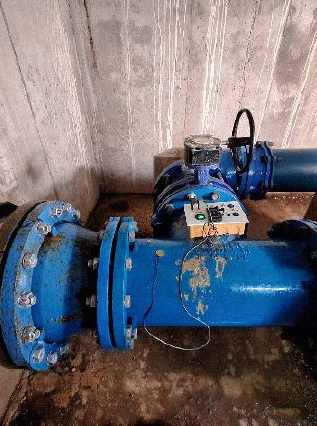
Inspection of the extraction point
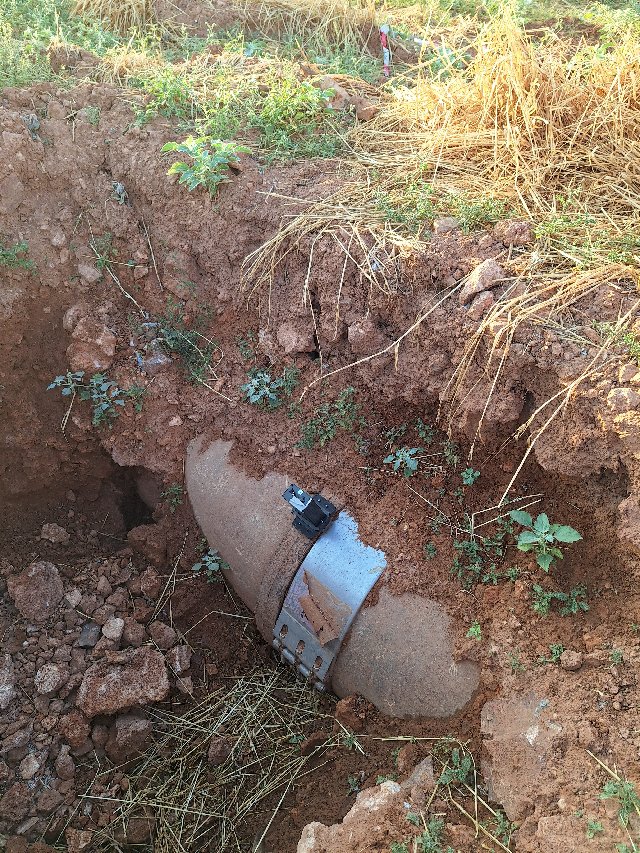
Installation of synchronizers
Installation of the insertion system
Results
Leaks
Incident Severity
F1
F2
F3
17 Total incidents
4
1
12
Air
Incident Severity
B1
B2
Total incidents
0
0
Anomalies
Incident Severity
A1
A2
Total incidents
0
0
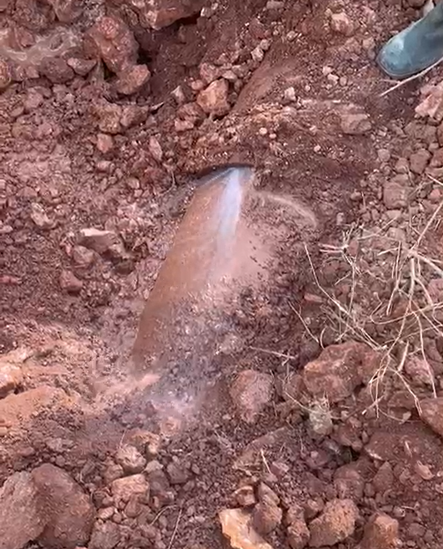
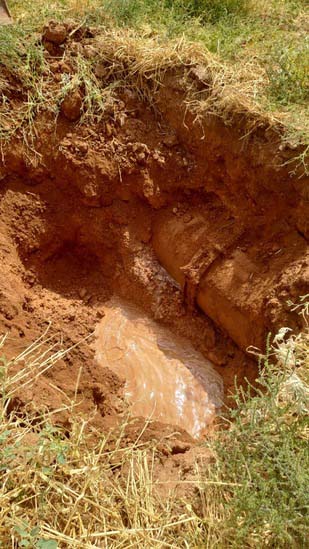
The subsequent analysis identified a total of 17 incidents, 5 of which were classified as critical (F1 and F2 levels). The estimated leak volumes for these incidents ranged between 8 and 23 m³/h, requiring urgent corrective action. The remaining 12 incidents (F3) were categorized as minor leaks which, while not posing an immediate risk, require ongoing monitoring to prevent escalation.
The repairs currently underway are expected to recover up to 3,000 m³ of water per day, significantly improving system efficiency and ensuring reliable supply for the municipality. This loss volume was calculated by the Nemo platform using artificial intelligence and verified by the client through field flow meter measurements—a clear example of how technology can deliver a positive and measurable impact on water management.
Thanks to the system’s high accuracy (±1 meter), a precise mapping was achieved, enabling the prioritization of interventions, optimization of resources, and a substantial reduction in Non-Revenue Water (NRW).
Conclusions
The Manzanares project reaffirms the effectiveness and precision of the Nautilus system for inspecting drinking water networks. The early detection of critical leaks will enable ACCIONA to reduce water losses, plan corrective actions, and strengthen the sustainability of its distribution system.
Beyond solving a technical challenge, the implementation of this technology represents a strategic step toward smarter, more efficient, and sustainability-driven water resource management.
With this initiative, ACCIONA positions itself as a leading operator in the use of advanced diagnostic tools to optimize the management of water networks in Spain.
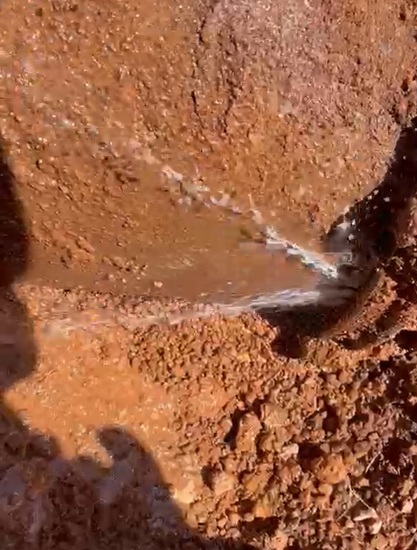
Graph of the most significant leaks detected by the Nautilus system
Leaks detected by Aganova’s Nautilus system