Leak Detection and Efficiency Improvements in a Large-Scale Transmission Network in Curitiba, Brazil
Executive Summary
In September 2025, Aganova, in collaboration with Effico Saneamento, carried out a project to inspect and assess approximately 111 km of pipeline for SANEPAR, the company responsible for water management in the city of Curitiba, which serves more than 4.1 million people.
The project, carried out within the framework of the Curitiba Integrated Water Supply System (SAIC), covered a total of nineteen sections of the main network to assess pipe conditions and detect leaks and anomalies under real operating conditions.
Analysis of data obtained using Nautilus technology identified 90 significant incidents across the network, including 60 leaks, of which 19 were categorized as critical (F1).
The project was considered a success for all parties involved, as 18 critical leaks have been repaired, allowing for the recovery of approximately 1.86 hm³ of water per year (5.1 MLD), generating an estimated economic impact of €124,000/year (R$744,250/year) and a return on investment of 38.2%.
Client
Partner
Sections
111- kilometer raw water pipeline
Location
Curitiba, Brazil
Date
September 2025
Diameter
DN400 – DN1100
Speed (m/s)
Min
Max
0.4
1.5
Pressure (bar)
Min
Max
Variable
Variable
Distance (m)
111,000
Introduction
SANEPAR, the company responsible for water management in Curitiba, operates an extensive network of main pipelines within the Integrated Water Supply System (SAIC).
In this context, efficient management of a large-scale network requires accurate information on the actual condition of pipelines, particularly in long, large-diameter sections where detecting hidden issues presents a significant technical challenge.
To address this need, SANEPAR relied on Aganova’s technology and, together with Effico Saneamento, carried out an in-line inspection project covering 111 km of the network, divided into nineteen sections, to assess the condition of the pipes using non-invasive technology.
Challenge
The main challenge of these inspections lay in the vast extent of the network to be analyzed, as well as the large number of people whose water supply depends on this infrastructure, which heightens the critical nature of any intervention. Added to this were the limitations of traditional methods, which do not allow for the precise inspection of long distances or the detection of hidden issues without disrupting service.
In this context, SANEPAR needed a non-invasive, high-precision diagnostic solution capable of operating under real-world service conditions, accurately detecting invisible anomalies, and, additionally, providing hydraulic data to facilitate efficient long-term asset management.
Solution and Implementation
The inspection process was carried out in the following stages:
- Preliminary inspection: Effico Saneamento conducted a preliminary inspection of 19 sections, gathering information and cross-checking it against available data. At the same time, SANEPAR carried out the necessary preparatory work for the deployment of the Nautilus technology.
- Installation of synchronizers: These were installed at a maximum distance of 750 meters apart. Installation took approximately 10 minutes per unit.
- Navigation: The sphere completed the route in an average of 2 hours per inspection.
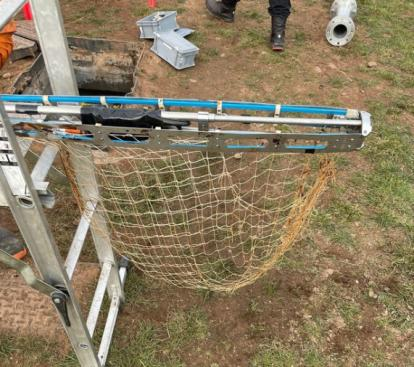
- Retrieval: The Nautilus retrieval system consisted of a pressure chamber mounted on a gate valve at the end of the section. This system allowed the sphere to be retrieved in a controlled manner without interrupting service. Once the sphere reached the retrieval point, the system was removed with the device inside (≈ 1.5 h).
Pipeline
Characteristics
Location
Curitiba – State of Paraná, Brazil
Pipeline material
Cast iron
Diameter
DN400 – DN 1100
Speed average
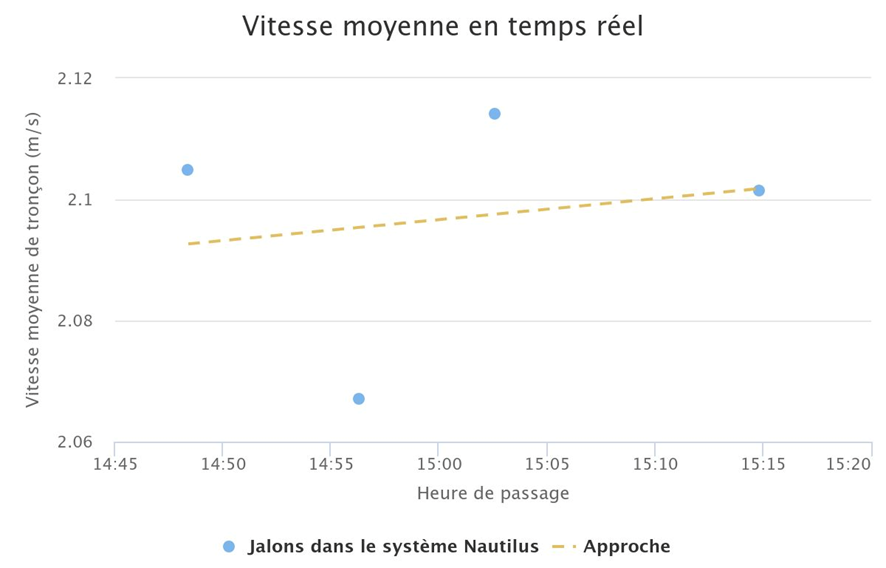
2.1 m/s
Pressure average
3.85 bar
Insertion point
DN100 air valve
Extraction point
DN100 air valve
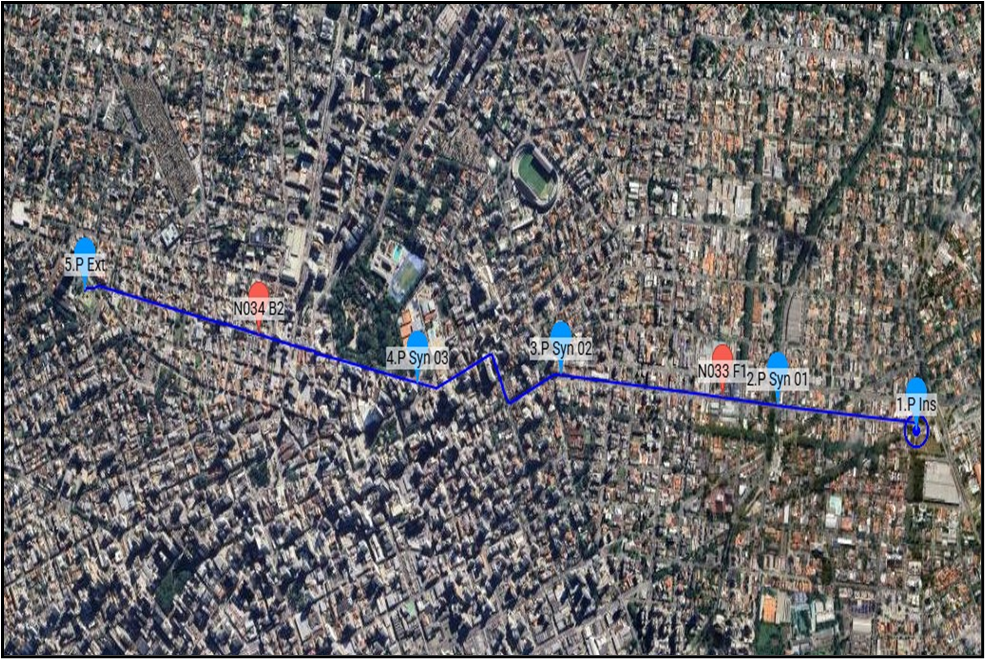
Aerial view of the inspected pipeline
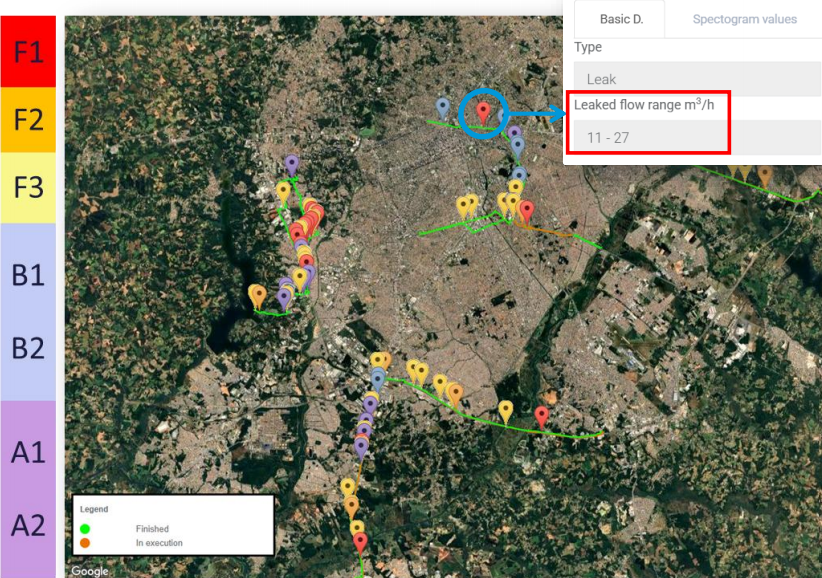
Aerial view of the detected leaks
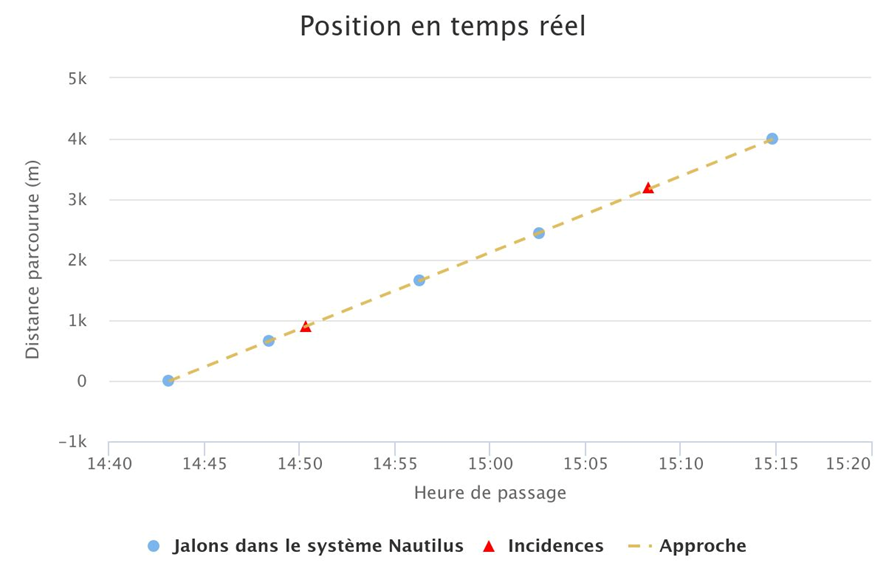
Nautilus’s real-time location
Average speed while sailing the Nautilus
Removal of the Nautilus sphere using a non-invasive retrieval system mounted on a DN100 valve.
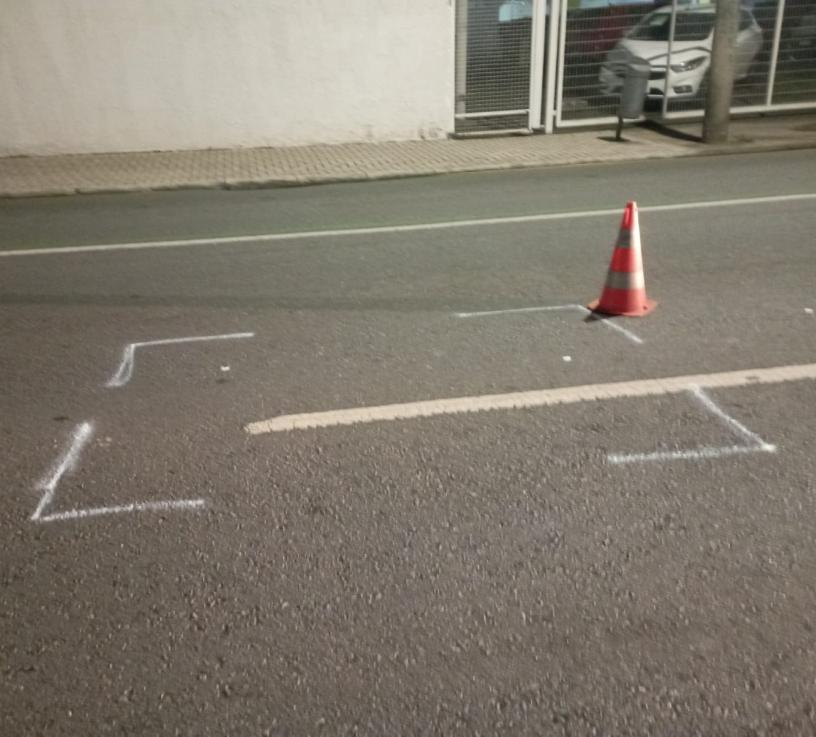
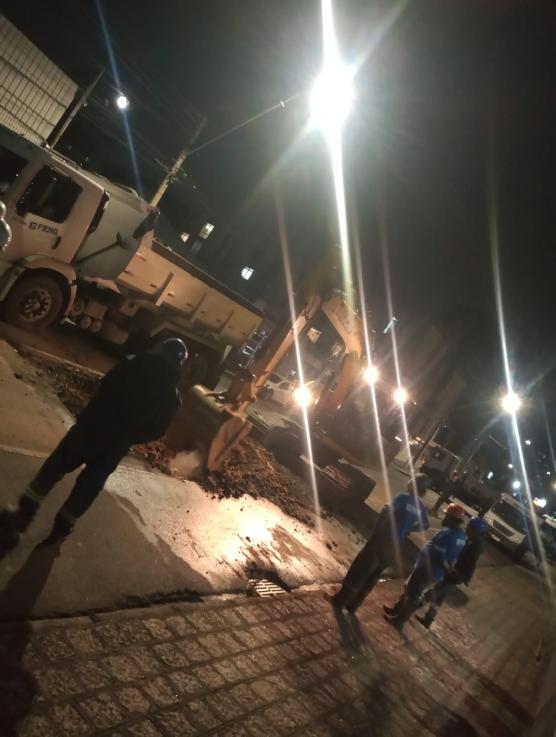
Identification of leak F1 based on the coordinates provided by Aganova.
Successful repair of leak F1.
Results
Leaks
Incident Severity
F1
F2
F3
1 incident
1
0
0
Air
Incident Severity
B1
B2
1 incident
1
0
Anomalies
Incident Severity
A1
A2
Total incidents
0
0
Total incidents: 2
- 1 major leak (F1) with an estimated maximum flow rate of 27 m³/h
- 1 bubble-related anomaly (B2)
Thanks to the precise coordinates provided by Aganova, the customer was able to locate and repair a critical leak (F1) located 250 meters from synchronization point PSyn01, recovering approximately 10 l/s of water.
The absence of surface signs and the failure of geophones to detect it confirmed that this was a long-standing, hidden leak located two meters deep, which would have been difficult to identify without the Nautilus system.
Conclusions
This project demonstrates the capability of Nautilus technology to perform inspections on large-scale transportation networks, enabling the assessment of over 100 km of pipelines with high precision and without interrupting service.
The identification and localization of issues, including critical leaks, has allowed SANEPAR to carry out targeted repairs, recover a significant volume of water, and improve the system’s operational efficiency.
Beyond the immediate impact, the results obtained establish this type of solution as a key tool for the efficient and sustainable management of large-scale transmission networks.