Advanced Leak Detection for Critical Water Infrastructure in Khouribga, Morocco
Executive Summary
In April 2026, Aganova, in collaboration with Mairav, carried out a high-precision internal inspection of one main transmission pipeline operated by ONEE in Khouribga, Morocco. The inspected asset, a DN1000 water transmission main extending over 8.2 km, forms part of a critical strategic infrastructure supplying water across the region.
To address this challenge, Nautilus in-line acoustic inspection technology was deployed. This next-generation system enable to detect non-visible leaks, air accumulations, and structural anomalies without interrupting service, while also delivering high-resolution hydraulic data for network management.
The inspection was completed on April 15, 2026, covering a total distance of 8.2 meters under an operating flow of approximately 1,404 m³/h. The survey identified nine confirmed leaks, including five major leaks (F1), one medium leak (F2), and three minor leaks (F3). The concentration of significant leakage events indicated an advanced level of structural degradation and led to the classification of the pipeline section as critical.
Beyond leak detection, the project provided ONEE with highly valuable condition assessment data and actionable insights for maintenance prioritization, risk mitigation, and future monitoring strategies, contributing to a more resilient and sustainable water transmission network.
Client
Partner
Section
8.2 km
Location
Khouribga, Morocco
Date
April 15, 2026
Diameter
DN1000
Speed (m/s)
Min
Max
0.30
0.31
Pressure (bar)
Min
Max
7.10
7.40
Distance (m)
8,200
Introduction
The National Office of Electricity and Drinking Water (ONEE) is responsible for supplying and managing water infrastructure across Morocco, making sure water gets reliably to major urban and industrial areas. As such, the Office mainly aims to ensure a continuous supply of drinking water, improve the performance of supply systems, reduce water losses, and support water security in the medium and long term.
Among its strategic pipelines is the Khouribga water main. Due to the risks linked to invisible leaks, the ONEE launched this operation to identify and fix the invisible leaks, all without interrupting the supply of drinking water.
For this purpose, Aganova, together with its local partner Mairav, deployed Nautilus technology, an advanced in-line acoustic inspection system designed to detect non visible leaks and provide actionable data for asset management.
Challenge
The primary challenge was the age and condition of the pipeline. As no visible signs of leakage were detected at the surface, identifying the exact location and severity of the anomalies using conventional methods was extremely difficult.
ONEE required a non-invasive and highly accurate inspection solution capable of operating under live conditions, precisely locating hidden leaks, and providing reliable data to support repair prioritization and long-term asset management decisions.
Solution and Implementation
The inspection process included the following stages:
1.Insertion: The Nautilus sphere was inserted into the pipeline at 15:35 through the designated access point under live operating conditions, enabling a non-invasive inspection without service
interruption.
2. Synchronizer Installation: Thirteen synchronizers were installed along the 8.2 km pipeline section to accurately track the sphere’s progression and ensure precise incident localization.
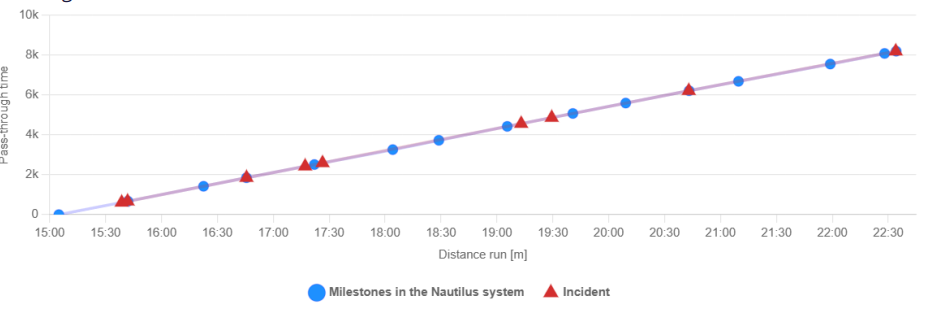
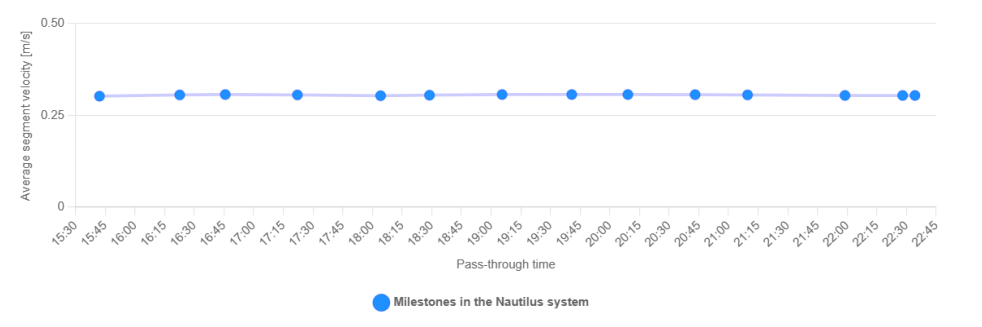
3. Navigation: During the inspection, the sphere travelled a total distance of 8,195 meters at an average velocity of approximately 0.30–0.31 m/s under an operating flow of around 1,404 m³/h. The sphere was continuously detected at each synchronization point, confirming stable navigation conditions throughout the inspection.
4. Extraction: The sphere was detected at the extraction point at 23:05 and successfully recovered from the pipeline at 23:30.
The pipeline inspected had the following characteristics:
Pipeline
Characteristics
Location
Khouribga, Morocco
Pipeline material
Pre-stressed concrete
Diameter
DN1000
Water speed
0.30–0.31 m/s
Pressure
8–16 bar
Inspected Length
8.2 km
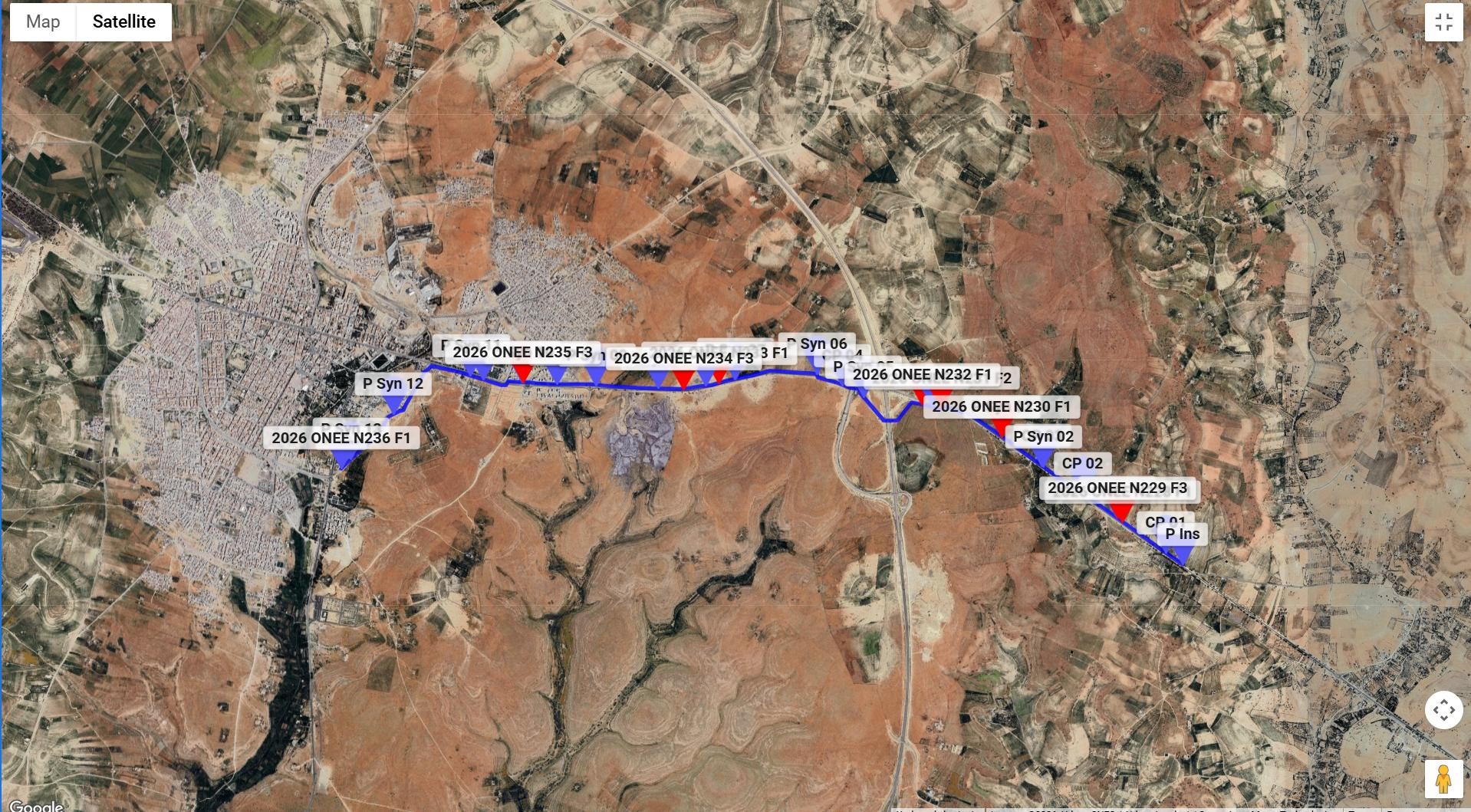
Overview of the SP5–SP6_2 pipeline showing the incidents detected during the inspection, synchronizer locations
(P SYN), insertion point (P INS), and extraction point (P EXT).
Real-time position of Nautilus during the inspection
Nautilus real-time average speed during the inspection
Results
Leaks
Incident Severity
F1
F2
F3
9 Total incidents
5
1
3
Air
Incident Severity
B1
B2
Total incidents
0
0
Anomalies
Incident Severity
A1
A2
Total incidents
0
0
The post-inspection analysis identified nine anomalies: 5 major leaks (F1) 1 leak (F2) 3 leaks (F3)
The inspection made it possible to assess the condition of this strategic water transport pipeline, and to pinpoint the detected anomalies based on their criticality. The results allowed ONEE to identify the sections that need priority intervention.
Because of the GIS coordinates provided by Aganova, ONEE started fixing leaks based on their urgency, which helped improve the efficiency of this water main and gain a flow of 25 liters per second.
Conclusions
This inspection demonstrated the effectiveness of Nautilus technology in assessing critical water transmission infrastructure under live operating conditions. The collaboration between ONEE Aganova and Mairav enabled the successful inspection of 8,2 km of DN1000 pipeline in Khouribga, Morocco, without interrupting service.
The inspection identified nine confirmed leaks, including five major leaks (F1), one medium leak (F2), and three minor leaks (F3), providing ONEE with precise information on the condition of the asset and the location of the most critical anomalies. These results support prioritizing repair activities and future condition assessments, helping to make better use of this strategic water transport feeder.
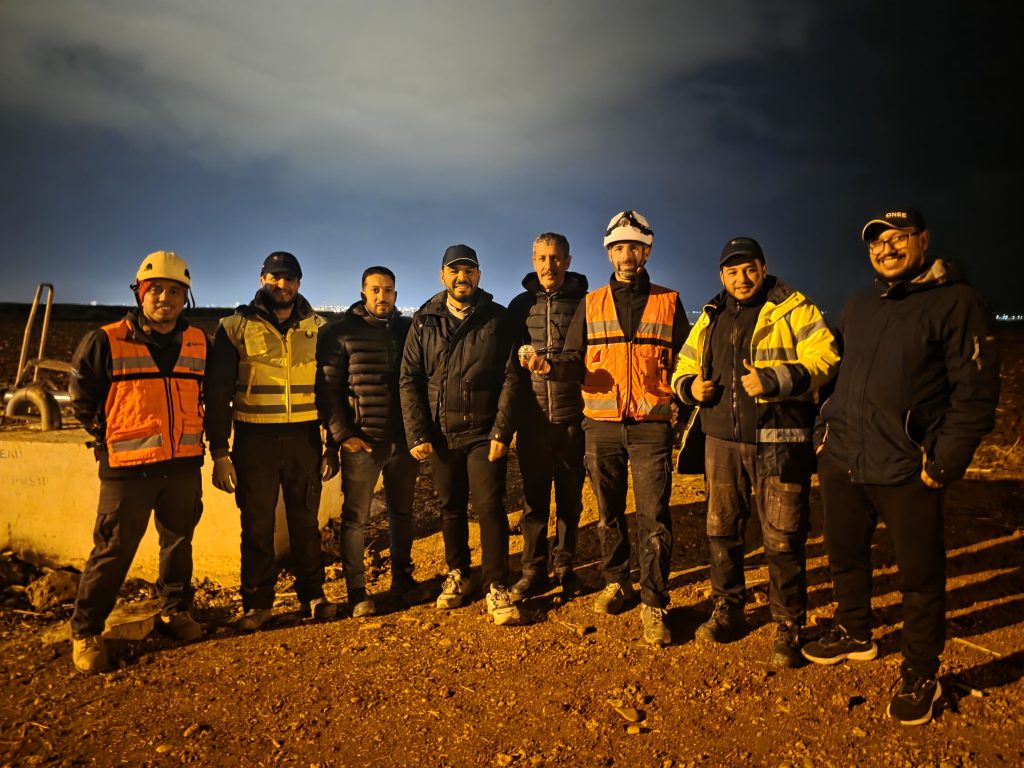
Mairav and Aganova teams
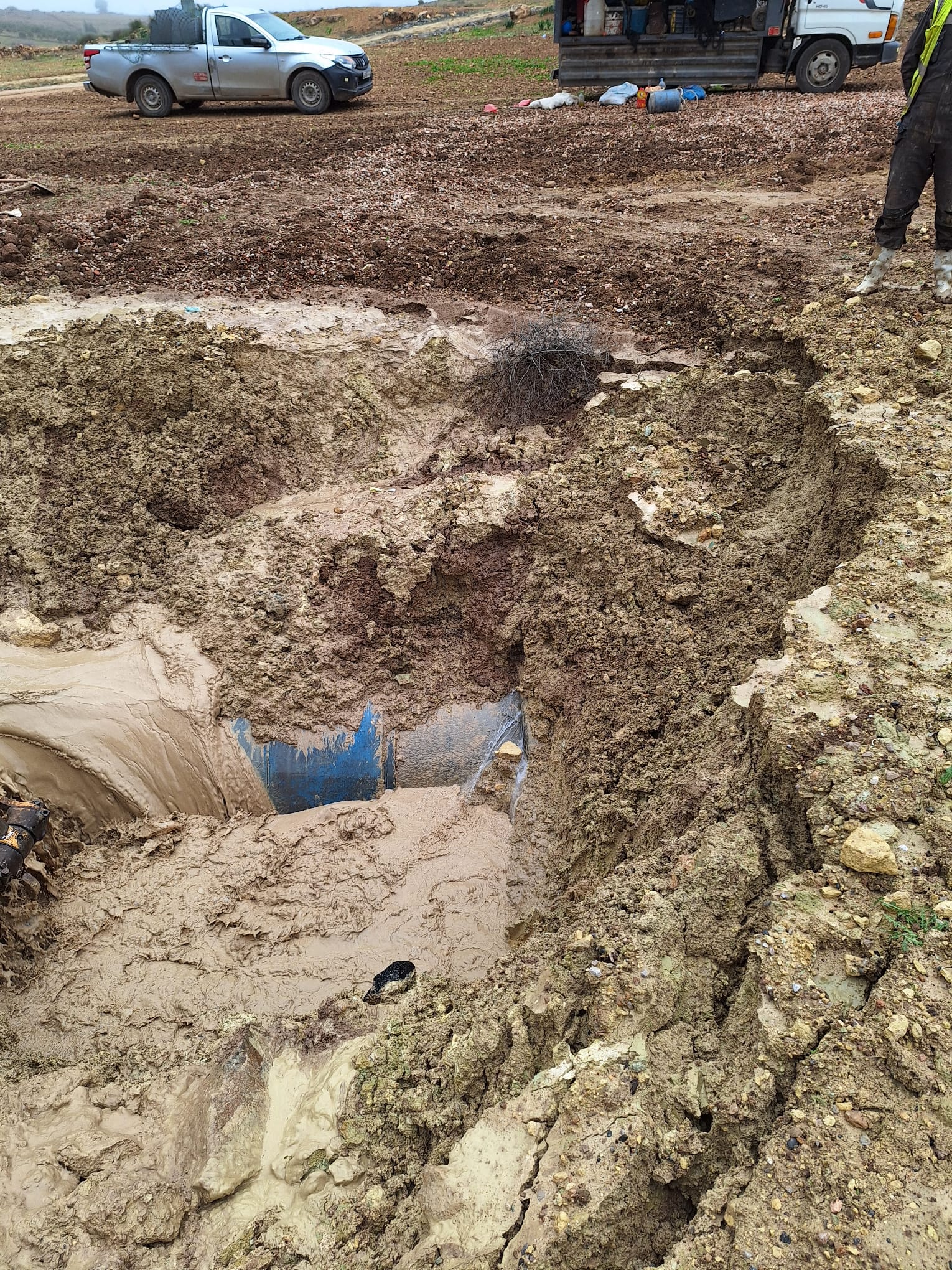
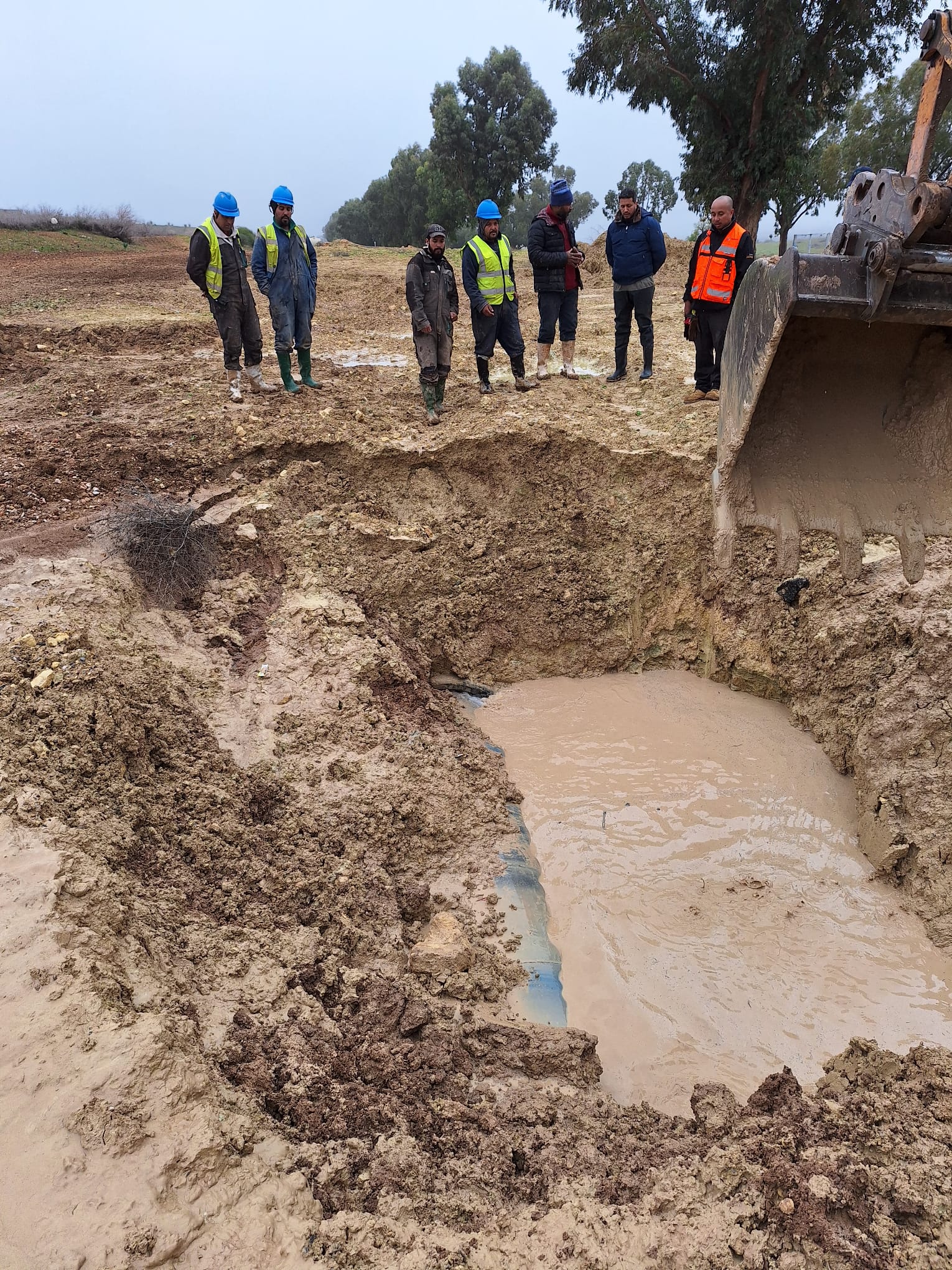
Leaks detected by Aganova’s Nautilus system