Internal CCTV inspection for leak detection and network diagnosis in Casablanca, Morocco
Executive Summary
Aganova, in collaboration with UDECO, carried out an internal inspection of 6 strategic sections of DN600–DN800 transmission mains operated by Lydec in Casablanca, Morocco. The network, built in concrete with a sheet metal jacket, had long suffered from water losses and operational inefficiencies, compounded by outdated drawings that made planning and intervention increasingly challenging.
To address this situation, Aganova deployed the Jabega System, a next-generation CCTV technology designed to capture real-time audiovisual data from inside large-diameter pipelines. The system enables utilities to detect leaks, corrosion, sediments, and structural anomalies with high precision, while also updating pipeline mapping by identifying unregistered elements such as valves, elbows, and material transitions.
The inspection, completed in just six days, revealed 54 incidents, including 10 leaks and 44 anomalies such as cracks, corrosion, and sediments. One of the detected leaks was subsequently confirmed during excavation, validating the accuracy of the technology. Thanks to the audiovisual evidence, Lydec was able to update its network records, prioritize interventions, and plan preventive maintenance more effectively.
Client
Section
6 sections of concrete pipelines with sheet metal jacket
Location
Casablanca, Morocco
Date
February 2023
Diameter
DN600 – DN800
Speed (m/s)
Min
Max
0.4
0.8
Pressure (bar)
Min
Max
3.5
7.5
Distance (m)
2,548
Introduction
Lydec, the water utility of Casablanca, sought detailed information on several strategic points of its transport network, where water losses and low pressure had been detected. However, uncertainty in the existing pipeline drawings made it impossible to know the type, extent, and location of the damage without advanced inspection technology.
To address this challenge, Lydec partnered with Aganova and its local collaborator UDECO to perform an internal audit of key DN600 and DN800 transmission pipelines using the Jabega System.
Challenge
The main obstacles were uncertain pipeline drawings with discrepancies between plans and reality, unknown anomalies such as leaks, corrosion and sediments invisible without internal inspection, and high water losses that impacted Casablanca’s supply capacity.
Lydec required a reliable technology capable of providing real-time audiovisual information from inside large-diameter pipelines, accurately identifying and locating leaks and anomalies, and updating pipeline maps to support effective future maintenance planning.
Solution and Implementation
Aganova deployed its Jabega System, a CCTV-based inspection tool designed for large-diameter water pipelines.
- Preliminary study: Aganova engineers analyzed available data (diagrams, valves, diameters, and critical elements) to plan the insertions.
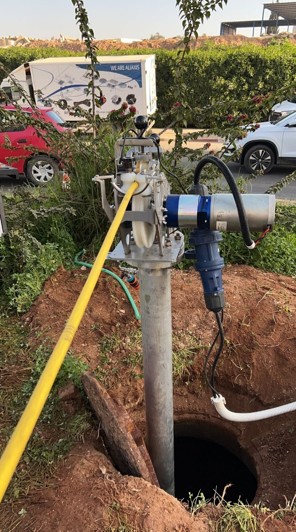
- Field inspection: 6 strategic insertions were executed over 6 days. Jabega provided real-time video and audio recordings from inside the pipelines, enabling accurate identification of anomalies and structural details.
- Traceability: the system’s navigability allowed updating pipeline maps, correcting discrepancies between drawings and actual conditions.
The pipeline inspected had the following characteristics:
Pipeline
Characteristics
Location
Casablanca, Morocco
Pipeline material
Concrete with sheet metal jacket
Diameter
DN600 – DN800
Average water speed
0.6 m/s
Pressure
3.5 – 7.5 bar
Insertion of the Jabega system
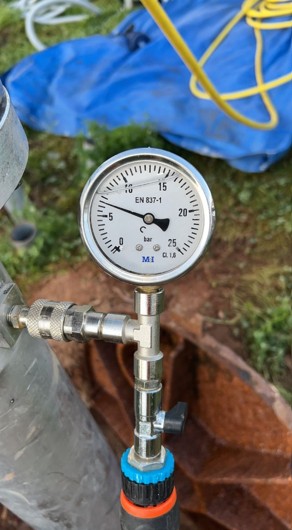
Pressure at the insertion point
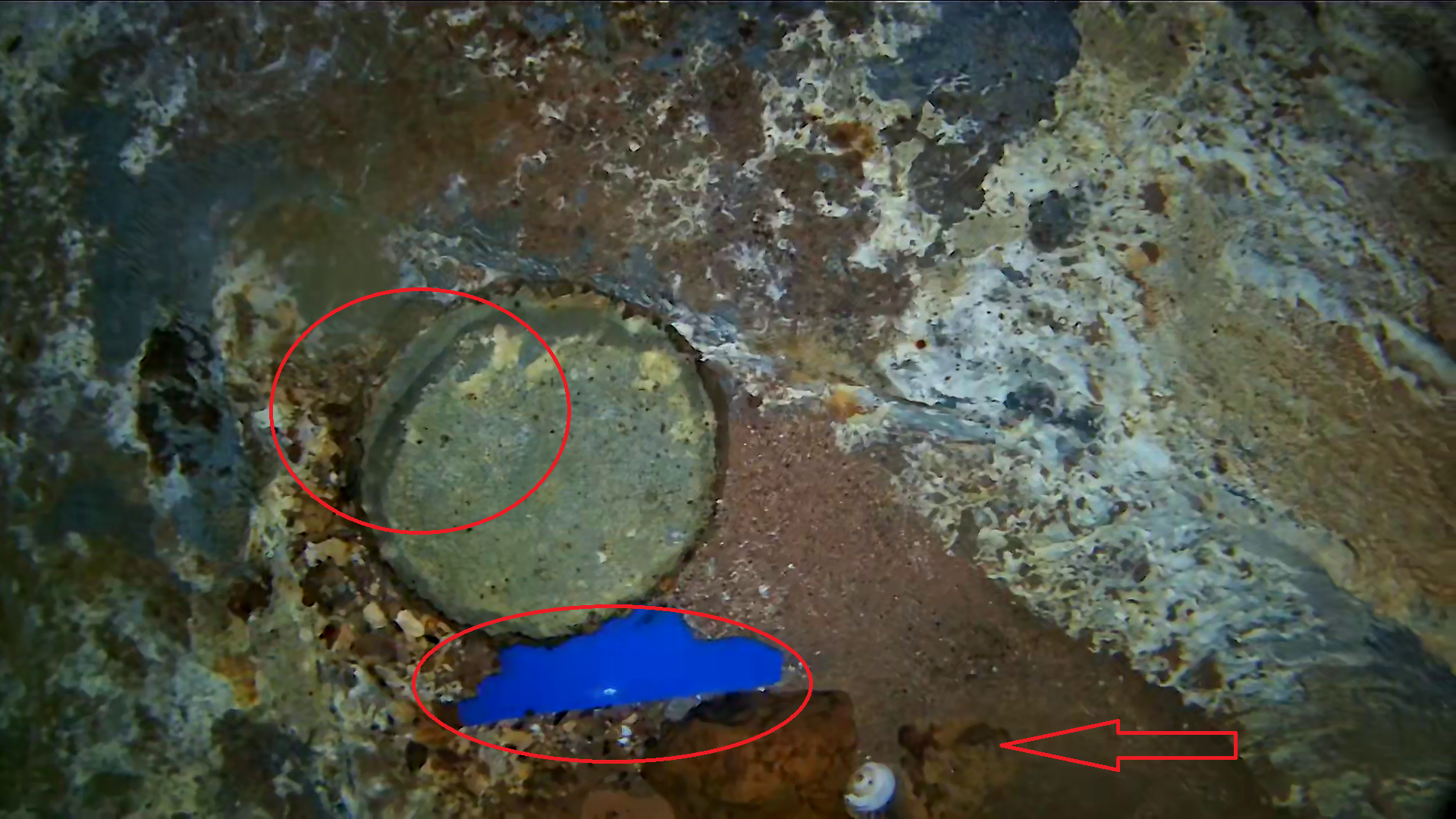
Unknown elements at the insertion point
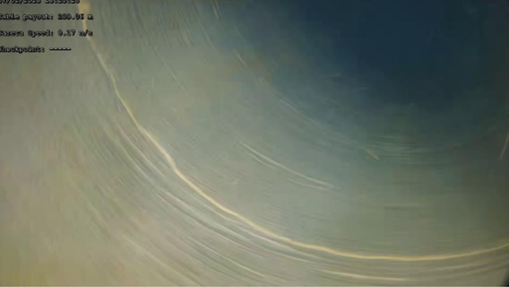
Circumferential leak
Results
Leaks
Incident Severity
F1
F2
F3
10 Total incidents
10
0
0
Air
Incident Severity
B1
B2
Total incidents
0
0
Anomalies
Incident Severity
A1
A2
44 Total incidents
44
0
The inspection delivered highly valuable insights:
- 54 incidents identified: including 10 leaks, 44 anomalies such as corrosion, sediments, longitudinal and circumferential cracks, and 11 interest points.
- Improved network accuracy: unregistered elements (valves, elbows, material changes) were detected and mapped, allowing Lydec to correct drawings.
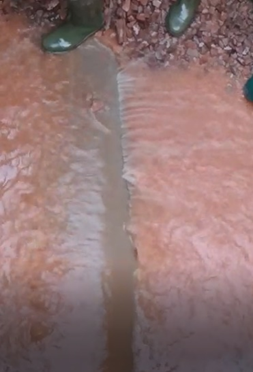
- Immediate verification: one of the leaks indicated by Jabega was later confirmed on-site during excavation.
- Operational efficiency: the audiovisual evidence allowed Lydec to prioritize interventions and plan preventive maintenance.
Beyond these immediate outcomes, the inspection also provided Lydec with a broader strategic view of its network. By visualizing the physiognomy of leaks and anomalies, the utility was able not only to quantify water losses but also to anticipate repair needs with greater accuracy, reducing uncertainty before excavation.
The findings revealed early signs of pipeline aging, offering indicators for long-term planning and reinforcing a preventive, data-driven asset management approach.
This combination of precise leak detection, updated mapping, and real-time audiovisual diagnostics positioned Jabega as a powerful tool for enhancing both operational efficiency and the resilience of Casablanca’s water supply system.
Conclusions
This project demonstrated the ability of the Jabega System to provide a detailed, real-time diagnosis of critical water pipelines. For Lydec, the benefits included:
- Early detection of leaks and anomalies.
- Accurate mapping of assets and correction of outdated drawings.
- A data-driven basis for preventive maintenance and network resilience.
By combining advanced audiovisual inspection with precise mapping, Aganova enabled Lydec to enhance the efficiency of its water supply network and ensure sustainable management of vital resources in Casablanca.
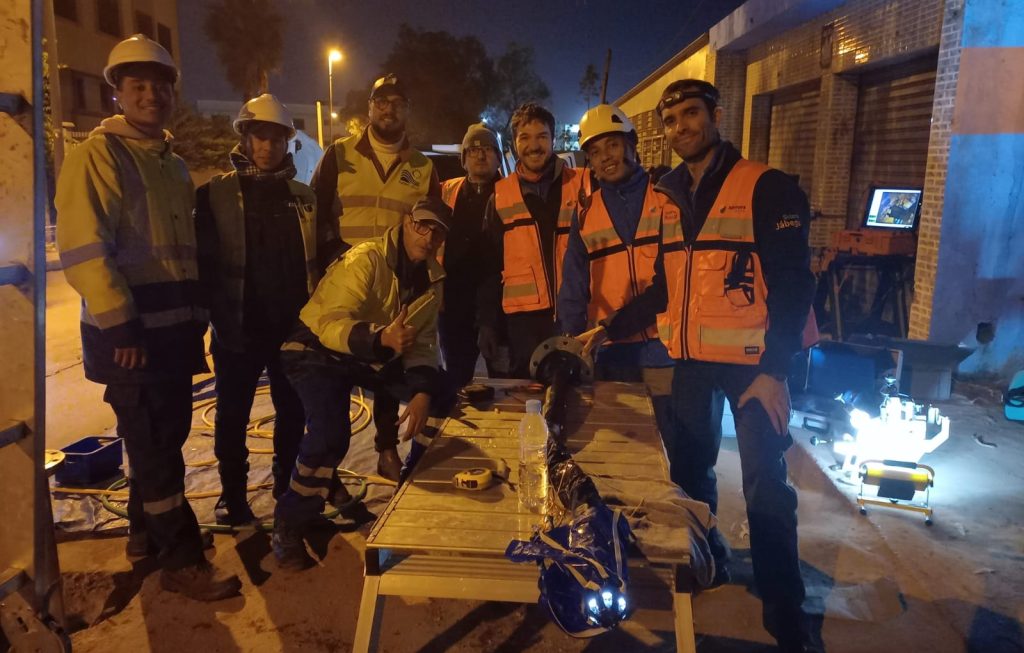
Aganova and UDECO teams
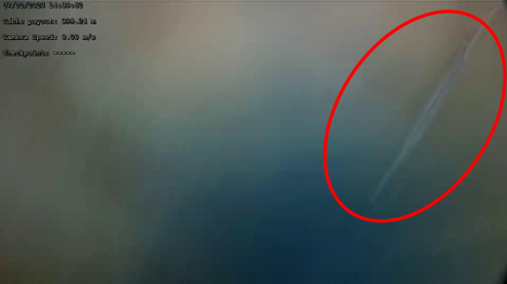
Longitudinal crack with leakage
Excavation at the leak location