Article published in Smart Water Magazine 31
By combining advanced leak detection, artificial intelligence and end-to-end project delivery, Aganova is turning hidden water losses into measurable, scalable and locally relevant replenishment benefits.
Water replenishment has moved from the margins of corporate sustainability to the centre of water stewardship strategies. As water stress intensifies and environmental commitments face greater scrutiny, leading companies are looking beyond efficiency within their own facilities to generate measurable impact in the communities and basins where they operate.
This shift is changing what companies expect from replenishment projects. Ambition is no longer enough: projects must recover real volumes, demonstrate local relevance, deliver results within realistic timeframes and provide credible data for long-term monitoring.
Global companies including Microsoft and Amazon have repeatedly selected Aganova for water replenishment initiatives in Spain, Ireland, Brazil and Italy. These collaborations reflect its ability to structure, execute and monitor large-scale programmes that transform invisible losses into quantifiable environmental benefits.
The model addresses one of water infrastructure’s most persistent problems: leakage. Vast volumes of treated water are lost through ageing pipelines before reaching users, often in large-diameter transmission mains where conventional methods struggle to locate hidden leaks accurately.
Recovering this water improves utility efficiency and resilience, makes more water available to communities and reduces pressure on rivers, reservoirs and aquifers. As the water has often already been treated and pumped, preventing leakage also cuts energy use and associated carbon emissions.
Unlike indirect compensation mechanisms, this approach produces a physical result within the water system itself: water that would otherwise have been lost remains available in the same basin.
More than an AI solution
Artificial intelligence is increasingly prominent in water management, but it cannot find or repair a leak on its own. Its value depends on reliable field data, suitable inspection technology and the expertise to turn analysis into a repairable location. Aganova connects these elements.
Aganova’s in-line Nautilus® technology travels through operational pipelines, gathering acoustic and other high-value data close to potential leaks. Its Nemo® analytics platform interprets this information using advanced algorithms and artificial intelligence.
This combination not only pinpoints leaks and anomalies but also estimates the volume of water lost at each location. Utilities can use this actionable intelligence to define concrete repair actions and prioritise the repair campaign according to the potential water savings.
Large transmission networks make this especially valuable: they carry significant volumes but often receive less continuous monitoring than distribution pipes, while their size, depth, materials and operating conditions complicate conventional inspection.
Aganova’s technologies can be deployed without interrupting supply and often without major pipeline modifications. This reduces implementation time, disruption and cost while enabling extensive inspection of critical infrastructure.
From leak detection to a complete replenishment model
A successful replenishment programme requires coordination between the sponsor, water utility, technology providers, operational partners, repair teams and organisations verifying the resulting water benefits.
Aganova has pioneered the application of leak detection to replenishment and a model for structuring and delivering these projects at scale.
Each programme begins by identifying a basin and utility where losses represent an operational challenge and a meaningful replenishment opportunity. Aganova assesses the network, defines the inspection strategy and coordinates deployment with the utility and technical partners.
After inspection, the data is analysed and potential leaks are reported for utility verification and repair. Recovered volumes are then calculated and monitored using recognised volumetric water benefit methodologies.
This end-to-end approach shows corporate partners how investment becomes impact, while giving utilities access to technology and asset intelligence that may be difficult to fund through operational budgets.
For sponsors, this creates a direct line between investment and outcome. For utilities, it accelerates the repair of hidden losses. For communities, more water remains available locally.
Scale, speed and cost per cubic metre
Water Positive targets need projects that move beyond pilots, deliver significant volumes across locations and produce measurable results at scale.
Its technologies can inspect long distances of pipeline in relatively short implementation windows, allowing projects to progress from initial planning to measurable water savings within the same year. The system can also be adapted to different network configurations and operating environments, making it suitable for deployment across geographies.
This scalability contributes to one of Aganova’s strongest competitive advantages: an exceptionally attractive cost per cubic metre of water recovered.
By focusing on physical losses that can be precisely located and repaired, resources are directed towards interventions with a clear volumetric outcome. The combination of efficient deployment, high inspection capacity and data-driven repair decisions maximises the impact generated by every euro or dollar invested.
The benefits also extend beyond the replenished volume. Reducing leakage can lower abstraction requirements, treatment costs and pumping energy. It can improve network performance, help utilities prioritise maintenance and reduce the risk of future failures. A single replenishment investment can therefore create operational, environmental and social value at the same time.
A model validated across countries and utilities
In Spain, Aganova and Microsoft launched a replenishment project with the Mancomunidad de Aguas del Sorbe, which supplies municipalities in the Madrid and Castilla-La Mancha regions. The initiative combines Nautilus and Nemo to identify hidden leaks and support the utility in maintaining a highly efficient transmission network. The collaboration contributes to Microsoft’s commitment to become Water Positive by 2030 while helping protect local water resources.
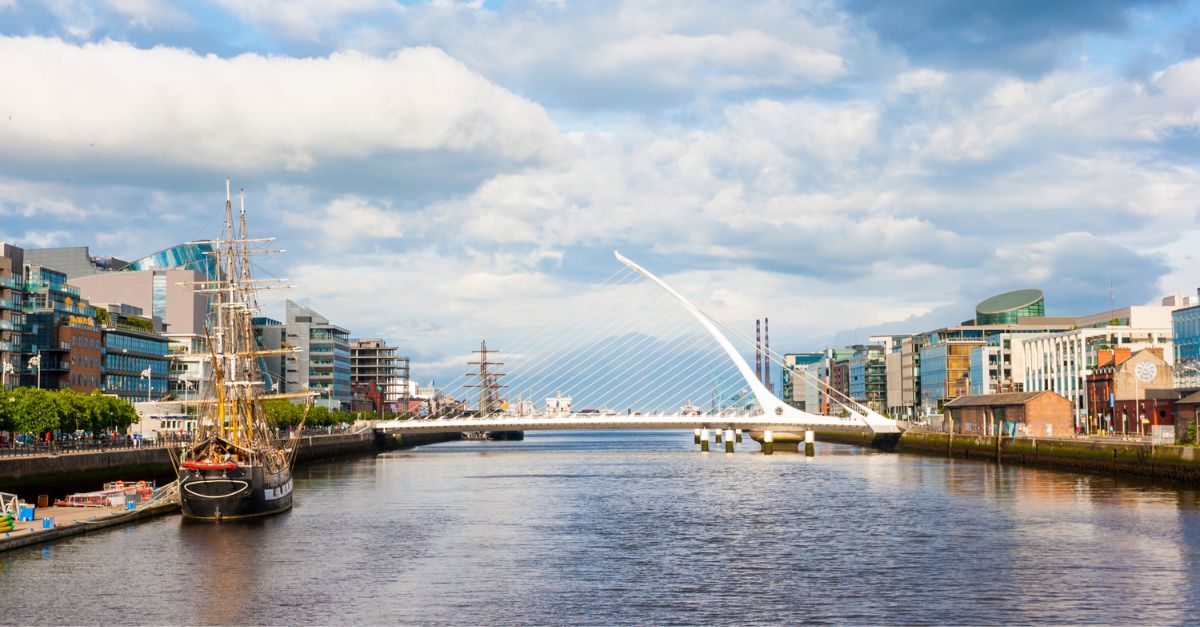
The model was subsequently extended to Dublin, Ireland, where Aganova is working with Microsoft, Uisce Éireann and SUEZ. The programme includes the inspection of 40 kilometres of strategic pipelines across the Greater Dublin Area over 11 months. Aganova identifies and locates leaks, Uisce Éireann leads the corresponding repairs, SUEZ supports implementation and the resulting water conservation benefits are monitored over time. The project demonstrates how corporate funding, utility expertise and advanced technology can be brought together within a common framework.
In Brazil, Amazon, Sabesp and Aganova launched a ten-year initiative in São Paulo. Approximately 64 kilometres of large-diameter pipelines are expected to be inspected, with estimated savings of 210 million litres of water annually. The long-term nature of the programme reflects another important evolution in replenishment: moving from short campaigns towards sustained partnerships capable of generating benefits year after year.
In Bergamo, Italy, Amazon selected Aganova for a project with local utility Uniacque. The initiative is expected to save approximately 200 million litres annually, with the water benefits monitored over a ten-year period. The project uses Aganova’s acoustic leak detection capabilities and AWS cloud infrastructure to support rapid analysis and precise diagnostics.
More recently, Amazon and Aganova launched a further project in Recife, Brazil, designed to prevent an estimated 165 million litres of water annually from being lost. The expansion into another Brazilian basin highlights the replicability of the model while allowing each programme to respond to the conditions and priorities of the local utility.
Together, these projects are expected to save around 1.8 million cubic metres of water annually, equivalent to more than 700 Olympic-sized swimming pools.
From local impact to recovered water
Water replenishment must be local: a cubic metre recovered in one basin cannot resolve scarcity in another. Each project must reflect the hydrological, infrastructural and social realities of its location.
Aganova combines local relevance with global scalability. Its technology and project framework can be replicated, while each programme is adapted to the basin, utility network and corporate water stewardship objectives.
Direct relationships with utilities are key. Aganova understands network operations and connects corporate sustainability investment with projects that utilities can implement effectively.
The next phase of corporate water stewardship will be defined by delivery. Companies will need to show where investment goes, how benefits are calculated and whether they continue over time.
Leak reduction addresses an existing inefficiency, strengthens public infrastructure and generates physical, local and measurable water benefits. Accurate inspection, AI-powered analytics and robust implementation also provide the scale and economics required by global portfolios.
Aganova integrates proprietary technology, field experience, utility relationships and long-term monitoring. This allows it to move quickly, inspect at scale and offer a cost per cubic metre that makes ambitious targets more achievable.
Ongoing partnerships with global technology companies show that corporate water commitments can be translated into measurable improvements within real networks.
In a world where every cubic metre matters, the most effective replenishment project may begin by recovering the water that is already there.